


 русский
 Español
 Deutsch
 عربى

Industry News


Are Fire Pipe Couplings Compatible Across Different Piping Systems
 2026.11.27
 Industry News
Content
- 1 1. Why Are Pipe Couplings Not Always Interchangeable?
- 2 2. Which Connection Types Should Buyers Understand?
- 3 3. How Can Buyers Verify Thread Compatibility?
- 4 4. Can Adapters Connect Different Piping Systems?
- 5 5. What Should Project Buyers Confirm Before Ordering?
- 6 6. How Does Honghe Support Different Coupling Requirements?
- 7 Frequently Asked Questions
Fire protection projects often involve piping components from different manufacturers, regions, and equipment generations. Although two fittings may share a similar nominal diameter, their connection structures are not necessarily interchangeable. Differences in thread specifications, coupling dimensions, sealing methods, and pressure ratings can affect the assembly of an entire firefighting network.
At Zhejiang Taizhou Honghe Technology Co., Ltd., we manufacture firefighting couplings and adapters for different connection requirements. We understand that contractors, distributors, and engineering procurement teams need to verify compatibility before ordering components. A fire pipe coupling should therefore be evaluated according to its actual connection dimensions and intended application rather than its nominal size alone.

1. Why Are Pipe Couplings Not Always Interchangeable?
Different piping systems may use different mechanical connection designs. A fitting that appears suitable during a visual inspection may still have incompatible thread geometry or locking dimensions.
Several factors influence compatibility:
- Thread specifications: NPT, BSP, and NH/NST threads have different dimensional characteristics and are not automatically interchangeable.
- Connection structure: Threaded, grooved, flanged, and quick-connect fittings require different mating components.
- Nominal diameter: Identical size markings do not guarantee matching internal or external dimensions.
- Sealing design: Gaskets, O-rings, and thread sealing arrangements must correspond to the connection design.
- Pressure rating: Connected components must support the required system operating conditions.
2. Which Connection Types Should Buyers Understand?
Fire protection piping and hose assemblies use several connection methods. Understanding their differences helps procurement teams prepare accurate specifications.
| Connection Type | Main Characteristics | Procurement Considerations |
| Threaded Coupling | Uses male and female threads | Verify thread type, pitch, diameter, and sealing method |
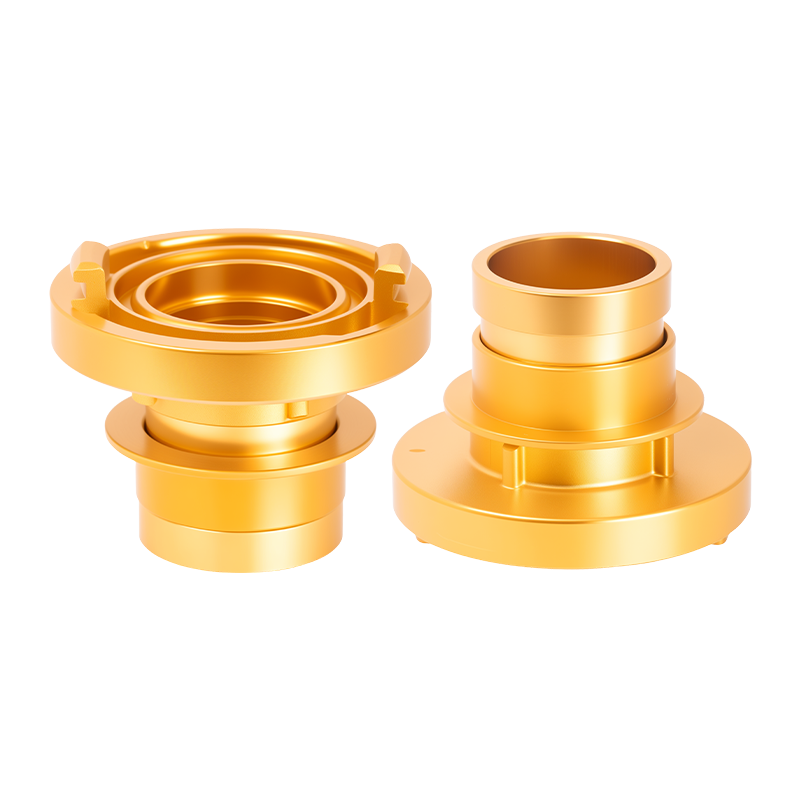
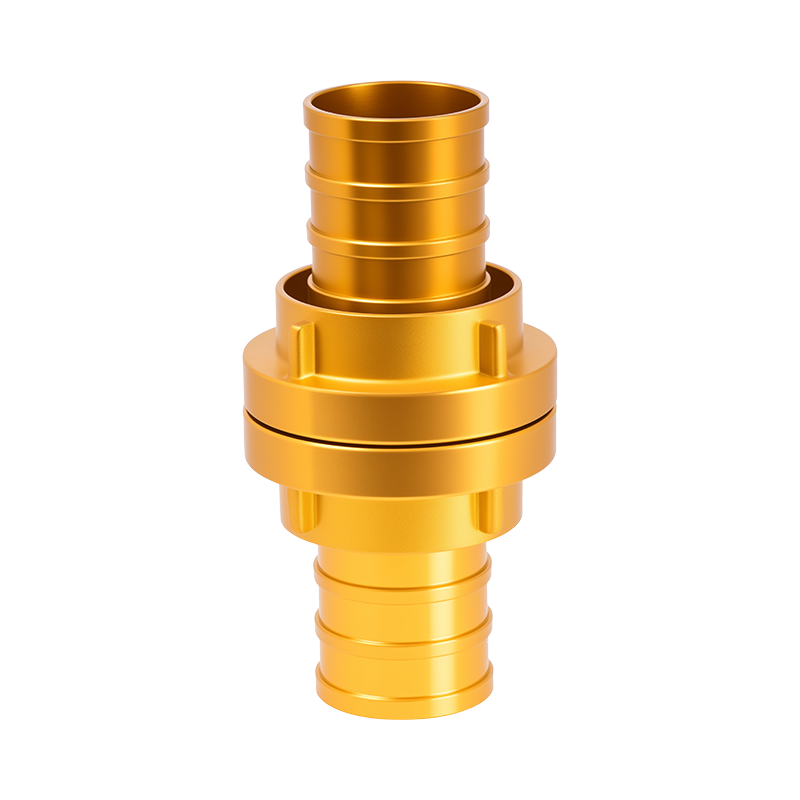
| Storz Coupling | Uses symmetrical lug-and-lock connections | Check nominal size and lug geometry |
| Grooved Coupling | Connects pipes through grooved ends and a housing | Confirm groove dimensions, gasket, and coupling type |
| Flanged Connection | Uses bolted mating flanges | Match flange dimensions, bolt patterns, and pressure class |
| Quick-Connect Coupling | Allows rapid connection and disconnection | Verify locking structure and mating interface |
These connection types serve different installation purposes. A quick-connect hose fitting, for example, should not be treated as a direct replacement for a grooved pipe coupling. The complete interface must match the equipment already installed.
3. How Can Buyers Verify Thread Compatibility?
Thread identification is particularly important in international fire equipment procurement. NPT, BSP, and NH/NST connections may have similar-looking profiles, but differences in thread pitch and geometry can prevent secure assembly.
Key Measurements to Check
- Thread diameter: Measure the external or internal thread dimensions.
- Thread pitch: Identify the distance between adjacent threads or threads per inch.
- Thread direction: Confirm whether the connection uses right-hand or another specified thread arrangement.
- Connection gender: Identify male and female ends.
- Sealing surface: Check whether sealing depends on a gasket, tapered thread, or dedicated seating surface.
We recommend providing technical drawings, thread measurements, or physical samples during the quotation stage. This allows our team to review the required dimensions and discuss an appropriate coupling configuration.
4. Can Adapters Connect Different Piping Systems?
Adapters can provide a practical solution for projects involving different connection standards. They may convert between male and female threads, different nominal diameters, or quick-connect interfaces.
For example, Honghe offers different firefighting adapter configurations, including 40 mm female to 65 mm male reducing adapters and 65 mm female to 80 mm male alloy quick-connect adapters.
Before ordering conversion fittings, buyers should confirm:
- The connection type at both ends.
- The nominal and actual dimensions of each interface.
- The pressure rating required by the application.
- The gasket material and sealing arrangement.
- Applicable local fire protection standards and approval requirements.
An adapter can bridge a dimensional difference, but it cannot compensate for an unsuitable pressure rating or an incorrectly designed sealing interface.
5. What Should Project Buyers Confirm Before Ordering?
Compatibility checks should be included in the purchasing process rather than postponed until installation. We suggest preparing a technical checklist for every coupling order.
| Item | Information to Provide |
| Application | Hydrant piping, fire hose, pump connection, or other system |
| Dimensions | Nominal size and actual connection measurements |
| Thread Standard | NPT, BSP, NH/NST, or specified alternative |
| Material | Brass, aluminum alloy, or other required material |
| Pressure | Required working and testing pressure |
| Documentation | Drawings, inspection reports, and applicable certifications |
For large procurement projects, checking a sample assembly before approving the production batch can help identify dimensional differences at an early stage.
6. How Does Honghe Support Different Coupling Requirements?
At Zhejiang Taizhou Honghe Technology Co., Ltd., we provide firefighting couplings, hose adapters, hydrant fittings, and related accessories for different market requirements. Our product range covers threaded and quick-connect configurations, with brass and aluminum alloy material options according to product specifications.
We also support customized connection requirements based on customer drawings and samples. Our team can review coupling dimensions, material requirements, surface treatments, and connection structures to help customers prepare suitable specifications for their projects.
Whether you are sourcing replacement fittings for an existing fire protection network or purchasing components for a new installation, accurate interface information helps make product evaluation and procurement communication more straightforward.
Frequently Asked Questions
1. Are NPT and BSP threads interchangeable?
No. Although some sizes may appear similar, their thread geometry and pitch can differ. Buyers should identify the exact thread specification before connecting components.
2. Can Storz couplings connect to threaded pipes?
A suitable conversion adapter can connect a Storz interface to a threaded connection. Both ends must match the required dimensions and pressure specifications.
3. Which materials are available for firefighting couplings?
Common options include brass and aluminum alloy. The appropriate material depends on mechanical requirements, corrosion exposure, weight considerations, and the intended application.
4. Should buyers test coupling samples before bulk purchasing?
Sample verification is recommended, particularly for customized connections or projects involving equipment from different manufacturers. Dimensional inspection and appropriate pressure testing should follow the applicable technical requirements.
Related Products

-
 (+86) 18968568369
Give Us A Call
-
 [email protected]
Drop Us a Line
-
 No. 32, Mechanical and Electrical Industrial Park, Donghai Avenue, Yuhuan City

Zhejiang Taizhou Honghe Technology Co., Ltd. is an emerging enterprise focusing on the research and development, production and sales of fire fighting equipment.
© 2025 Zhejiang Taizhou Honghe Technology Co., Ltd.
Storz Coupling & Firefighting Equipment Factory
