


 русский
 Español
 Deutsch
 عربى
عربى
Industry News


Thread Incompatibility Patterns in Female Fire Hose Reducing Adapters
 2026.07.17
 Industry News
Content
- 1 Why Thread Compatibility Is More Complex Than Size Matching
- 2 Common Thread Incompatibility Patterns in Fire Hose Reducers
- 3 How Reducing Adapters Develop Hidden Leakage Issues
- 4 Material Factors Affecting Threaded Adapter Performance
- 5 Pressure Effects on Incompatible Fire Hose Adapters
- 6 Methods to Identify Thread Compatibility Before Installation
- 7 Future Direction of Fire Hose Adapter Compatibility
- 8 Final View on Thread Compatibility Challenges
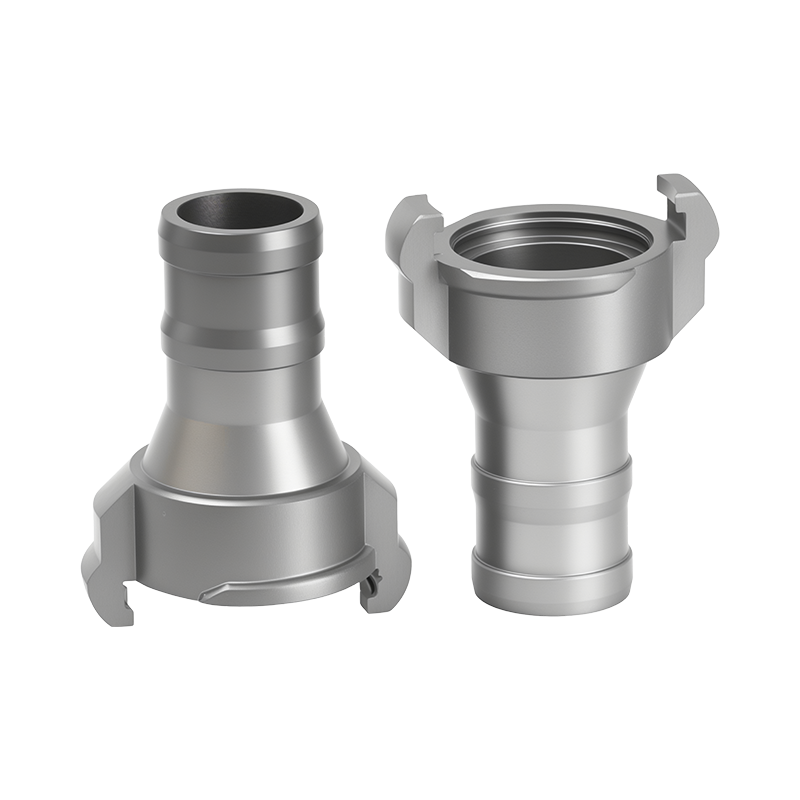
Fire hose connection systems often appear straightforward, but thread compatibility can become complicated once different standards, regions, and equipment types are combined. A Female Threaded Fire Hose Reducing Adapter is designed to connect hose fittings with different sizes, yet thread mismatch remains one of the common causes of leakage, pressure loss, and connection failure.
Many users focus on diameter differences during adapter selection, while thread profile, pitch, sealing method, and material interaction are equally important. A reducer that physically screws together does not always guarantee a stable connection under working pressure. Fire hose thread standards vary between regions, with systems such as NH/NST, NPSH, and other regional specifications using different dimensions and sealing methods.
Why Thread Compatibility Is More Complex Than Size Matching
Diameter Alone Cannot Define a Reliable Connection
A common misunderstanding is that two fittings with identical nominal sizes should connect correctly. Thread systems contain several technical parameters that determine compatibility.
- Thread pitch: The distance between individual thread peaks affects engagement accuracy.
- Thread angle: Different angles create uneven contact surfaces.
- Thread diameter: Small dimensional differences may prevent full engagement.
- Thread type: Straight and tapered threads use different sealing principles.
Fire hose connections commonly rely on standardized thread systems, but standards differ across markets. A reducer manufactured for one specification may not directly match another system without a conversion adapter.
Thread Engagement Does Not Always Create the Seal
Another overlooked factor is the sealing method. Many fire hose connections use straight threads where the gasket creates the water seal, while the threads mainly provide mechanical holding force.
| Thread Type | Sealing Method | Common Compatibility Issue |
| NH / NST | Gasket compression | Wrong gasket seat dimension |
| NPSH | Flat gasket sealing | Confusion with NPT threads |
| NPT | Thread interference sealing | Incorrect connection with straight threads |
Using thread seal tape on a connection designed for gasket sealing may not solve leakage problems because the sealing surface is located at the adapter face rather than between thread surfaces.
Common Thread Incompatibility Patterns in Fire Hose Reducers
NH and NPSH Confusion
NH/NST and NPSH threads create frequent compatibility questions because their external appearance is similar. Both use straight thread designs, yet dimensional differences can prevent proper engagement.
- Similar appearance creates identification mistakes.
- Partial thread engagement increases mechanical stress.
- Incorrect gasket positioning causes water seepage.
A connection may appear tight during assembly but fail under operating pressure due to insufficient gasket compression.
NPT and Fire Hose Thread Mixing Problems
NPT pipe threads and fire hose threads often create confusion because they can appear visually compatible. However, their sealing structures are different.
NPT uses tapered threads designed to create sealing through thread interference, while many fire hose connections use straight threads combined with gasket sealing. Mixing these designs may produce unstable connections that loosen during vibration or pressure fluctuations.
How Reducing Adapters Develop Hidden Leakage Issues
Uneven Thread Loading
A Female Threaded Fire Hose Reducing Adapter transfers mechanical forces between two different connection sizes. Incorrect thread matching creates uneven loading along the adapter body.
- One side of the thread carries excessive force.
- The gasket receives uneven compression.
- Repeated pressure cycles accelerate wear.
This problem becomes more noticeable in applications involving pumps, fire suppression equipment, and portable water systems where pressure changes happen frequently.
Gasket Seat Misalignment
The gasket area inside a female adapter requires accurate positioning. A gasket that is too small may allow bypass leakage, while excessive compression may deform the sealing material.
Guidelines from the USDA Forest Service highlight that gasket dimensions depend on the coupling seat design and must provide adequate coverage to prevent seepage.
| Gasket Problem | Possible Result |
| Insufficient outer diameter | Water leakage around sealing edge |
| Excessive compression | Premature gasket deformation |
| Wrong material selection | Reduced resistance to temperature or chemicals |
Material Factors Affecting Threaded Adapter Performance
Aluminium Alloy vs Brass Connection Behavior
Female threaded reducers are commonly produced from aluminium alloy, brass, stainless steel, and other materials. Each material reacts differently under repeated connection cycles.
- Aluminium alloy: Lightweight and suitable for portable equipment but requires attention to thread wear.
- Brass: Provides traditional durability but increases overall component weight.
- Stainless steel: Offers strong corrosion resistance in demanding environments.
Combining different metals may also introduce galvanic corrosion risks, especially in outdoor hose systems exposed to moisture and minerals.
Thread Damage During Repeated Assembly
Fire hose adapters are frequently connected and disconnected during operation. Repeated cycles may gradually affect thread accuracy.
- Cross-threading damages thread peaks.
- Foreign particles increase friction during tightening.
- Excessive torque changes sealing alignment.
Pressure Effects on Incompatible Fire Hose Adapters
Pressure Pulsation Creates Additional Stress
Water systems powered by pumps often experience pressure fluctuations. A weak thread connection may tolerate static pressure but fail during repeated pressure waves.
| Operating Condition | Potential Thread Impact |
| Stable water pressure | Lower mechanical movement |
| Rapid valve opening | Sudden loading on thread surfaces |
| Pump cycling | Repeated fatigue on gasket and threads |
Methods to Identify Thread Compatibility Before Installation
Technical Inspection Points
- Confirm thread marking: Check manufacturer identification or specification labels.
- Measure pitch: Compare thread spacing rather than relying on visual inspection.
- Inspect gasket seat: Verify sealing surface dimensions.
- Review pressure rating: Ensure the reducer supports the complete system pressure.
Future Direction of Fire Hose Adapter Compatibility
Fire hose networks continue to involve more equipment combinations, especially across emergency response, industrial water transfer, and agricultural applications. This trend increases demand for adapters that clearly identify thread standards and provide reliable conversion between different systems.
Improved product marking, standardized documentation, and accurate dimensional control help reduce compatibility problems. A reducer should not only connect two sizes but also maintain correct mechanical and hydraulic performance throughout operation.
Final View on Thread Compatibility Challenges
Thread incompatibility in a Female Threaded Fire Hose Reducing Adapter is rarely caused by a single dimension error. Differences in thread standards, gasket design, sealing methods, and material behavior work together to influence connection reliability.
Understanding these hidden compatibility patterns helps users avoid unexpected leakage and build safer hose systems with stable performance across different applications.
Related Products

-
 (+86) 18968568369
Give Us A Call
-
 [email protected]
Drop Us a Line
-
 No. 32, Mechanical and Electrical Industrial Park, Donghai Avenue, Yuhuan City

Zhejiang Taizhou Honghe Technology Co., Ltd. is an emerging enterprise focusing on the research and development, production and sales of fire fighting equipment.
© 2025 Zhejiang Taizhou Honghe Technology Co., Ltd.
Storz Coupling & Firefighting Equipment Factory
