


 русский
 Español
 Deutsch
 عربى
عربى
Industry News


Where Is The Forestry Hose Coupling Used In Wildfire Control?
 2026.05.01
 Industry News
Content
Role of Hose Connections in Forestry Fire Control
Forestry fire control systems rely on long-distance water transfer across complex terrain. Hose lines often need to be assembled quickly across uneven ground, making connection components a central part of the system structure. The Forestry Hose Coupling serves as the interface connecting hoses, pumps, and distribution equipment during field deployment.
A Forestry Hose Coupling Factory focuses on producing connectors that can operate under outdoor exposure conditions, including moisture, dust, and repeated assembly cycles. These environments require mechanical stability in both connection and disconnection stages.
Honghe operates as a manufacturing base specializing in fire hose connection systems. As a Forestry Hose Coupling Factory, our production involves CNC machining of aluminum alloy and brass, combined with surface treatment processes such as anodizing and electroplating to enhance corrosion resistance.
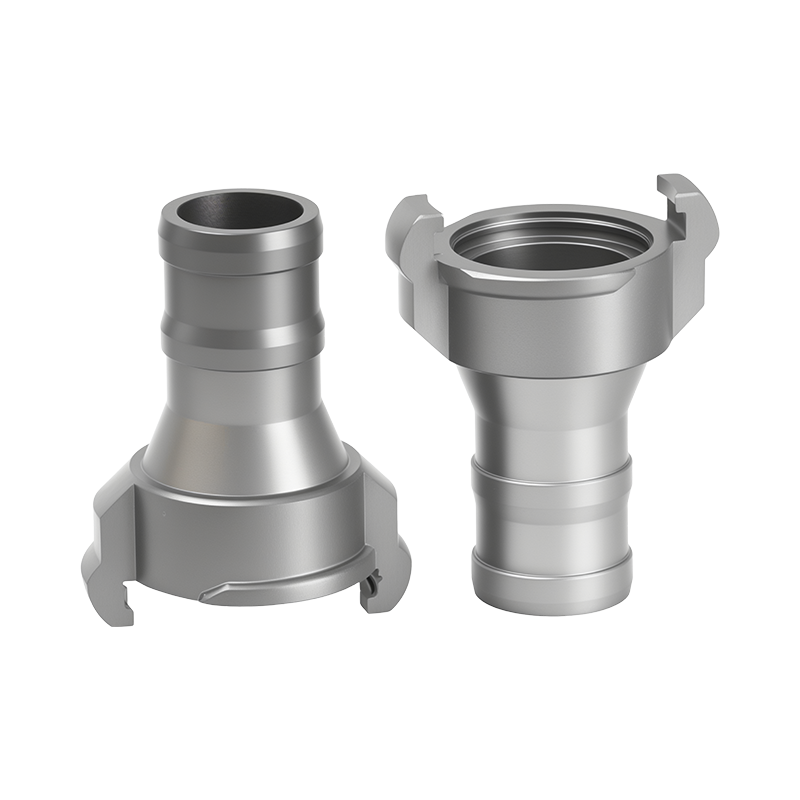
Structural Configuration and Functional Design
The structure of a Forestry Hose Coupling is built around alignment geometry, sealing interface control, and mechanical locking engagement. These structural elements allow hoses to connect without prolonged adjustment during deployment.
A Forestry Hose Coupling Factory designs different configurations, including threaded types, quick-connect structures, lockable mechanisms, and swivel layouts. Each structure serves different field connection needs based on hose routing conditions.
Honghe applies precision machining systems to maintain consistent thread geometry and interface alignment. Within a Forestry Hose Coupling Factory environment, CNC processes control dimensional variation across repeated production batches.
Surface texture options such as knurled grips or reinforced edges are used to support manual handling during wet or unstable conditions. These features are developed through usage feedback from forestry firefighting applications.
Material Selection and Environmental Adaptation
Forestry firefighting environments often expose equipment to moisture, debris, and temperature variation. The Forestry Hose Coupling is typically produced using aluminum alloy or brass to handle these conditions.
A Forestry Hose Coupling Factory selects materials based on corrosion behavior and mechanical wear resistance. Aluminum alloy is often used for lightweight handling, while brass is selected for long-term exposure stability in demanding environments.
Honghe integrates surface treatment methods such as anodized coating or electroplated finishing. These processes are part of controlled production workflows inside the Forestry Hose Coupling Factory to maintain consistent surface performance.
The design also accounts for repeated assembly cycles, where coupling interfaces must maintain alignment accuracy after multiple connections and disconnections.
Pressure Flow and Connection Stability
Water flow in forestry firefighting systems often travels through extended hose networks. The Forestry Hose Coupling plays a role in maintaining stable passage alignment between connected segments.
Inside a Forestry Hose Coupling Factory, pressure testing systems evaluate how connectors respond under varying flow conditions. These evaluations help maintain structural consistency across production batches.
Honghe applies controlled machining tolerances to ensure thread engagement remains stable during use. The Forestry Hose Coupling is designed to maintain alignment between hose sections even when system layouts change in the field.
The sealing interface structure reduces leakage points at connections, thereby supporting continuous water transfer across multiple hose segments.
Related Products




-
 (+86) 18968568369
Give Us A Call
-
 [email protected]
Drop Us a Line
-
 No. 32, Mechanical and Electrical Industrial Park, Donghai Avenue, Yuhuan City

Zhejiang Taizhou Honghe Technology Co., Ltd. is an emerging enterprise focusing on the research and development, production and sales of fire fighting equipment.
© 2025 Zhejiang Taizhou Honghe Technology Co., Ltd.
Storz Coupling & Firefighting Equipment Factory
