


 русский
 Español
 Deutsch
 عربى
عربى


Why Do Instantaneous Fire Couplings Leak
 2026.06.12
 Industry News
Content
- 1 Pressure-Activated Seal Behavior
- 2 Gasket Wear and Elastic Fatigue
- 3 Dimensional Mismatch and Compatibility Stress
- 4 Contamination and Debris Accumulation
- 5 Mechanical Wear in Locking Lugs
- 6 Operating Pressure Characteristics Reference
- 7 Installation Orientation and Flow Direction Influence
- 8 System-Level Interaction Effects
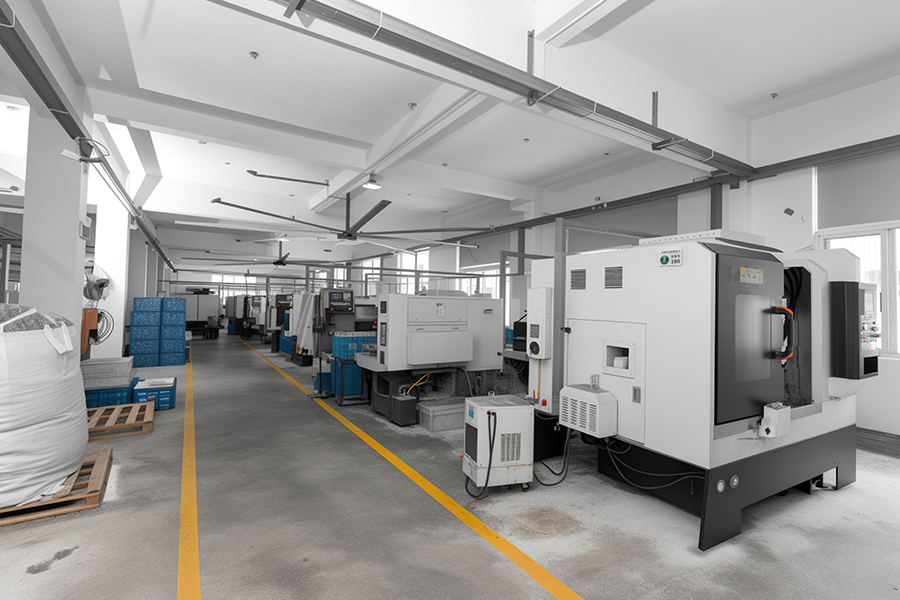
An Instantaneous Fire Coupling Manufacturer typically produces fittings designed for rapid connection without threading, yet leakage issues still appear across field operations. Their snap-fit mechanism allows fast engagement, but reports from service testing and maintenance logs show that seepage often originates from sealing geometry mismatch, pressure behavior, or assembly deviation rather than complete structural failure. Even newly installed fittings may exhibit minor dripping under low flow conditions due to the way the sealing system is energized by pressure rather than mechanical compression.
Pressure-Activated Seal Behavior
- Seal depends on internal water pressure to expand contact surfaces
- Low-pressure operation may not fully activate sealing taper
- Uneven flow distribution reduces contact uniformity
Instantaneous couplings use a tapered sealing interface between male and female components. Water pressure forces the seal into tighter engagement, meaning low-pressure operation may fail to energize the sealing zone fully. This design characteristic explains why minor dripping can appear during system priming or low-demand operation. Once pressure stabilizes, leakage often reduces but does not always disappear entirely in worn systems.
Gasket Wear and Elastic Fatigue
- Rubber sealing inserts lose elasticity after repeated compression cycles
- Surface micro-cracks develop under thermal variation
- Compression set reduces sealing rebound capability
Sealing elements inside instantaneous couplings are exposed to repeated stress cycles. Over time, elastomer materials lose resilience, reducing their ability to conform to mating surfaces. Even slight deformation creates micro channels where water can escape under pressure. Maintenance records frequently show that replacing the sealing ring resolves leakage without modifying the metal body.
Dimensional Mismatch and Compatibility Stress
- Manufacturing tolerance differences affect sealing alignment
- Cross-standard adapters introduce additional interface points
- Worn coupling heads reduce mating precision
Instantaneous systems rely on precise alignment between male and female components. Even small dimensional deviations can reduce sealing surface contact area. Use of adapters between different coupling systems introduces extra junctions, increasing potential leakage paths. Field reports show that older fittings used alongside newer replacements often exhibit inconsistent sealing behavior due to tolerance drift.
Contamination and Debris Accumulation
- Sand, grit, and organic debris obstruct full seating
- Internal corrosion particles interfere with sealing edges
- Residue buildup prevents full engagement of locking mechanism
Operational environments such as forestry zones and urban construction areas expose couplings to particulate contamination. Debris trapped inside the coupling interface prevents uniform contact, creating localized gaps. Even thin layers of sediment can disrupt sealing performance, especially under fluctuating pressure conditions. Regular cleaning reduces recurrence but does not eliminate wear already present on sealing faces.
Mechanical Wear in Locking Lugs
- Repeated coupling cycles round off lug engagement edges
- Spring tension loss reduces locking force consistency
- Vibration under flow conditions causes micro loosening
Instantaneous couplings rely on lug engagement to maintain axial compression between sealing surfaces. Over time, mechanical wear reduces engagement depth, weakening the force holding the coupling halves together. Under pressure fluctuations, slight axial movement can occur, creating intermittent leakage that appears only during dynamic flow rather than static testing.
Operating Pressure Characteristics Reference
| Parameter | Typical Range | Behavior Impact | Leakage Risk Pattern |
| Working Pressure | 6–16 bar | Seal compression activated by flow | Low activation leakage possible |
| Test Pressure | 20–25 bar | Full seal engagement | Minor seepage at worn interfaces |
| Seal Material | Rubber / Elastomer | Compression-dependent sealing | Hardening increases micro gaps |
| Connection Cycles | 300–1500 cycles | Mechanical wear accumulation | Progressive leakage at lug points |
Installation Orientation and Flow Direction Influence
- Incorrect male-female orientation reduces seal activation efficiency
- Reverse flow conditions disturb pressure-assisted sealing
- Improper seating angle prevents full taper engagement
Instantaneous couplings rely on directional sealing geometry. Flow direction determines how pressure energizes the sealing cone. Misalignment or reversed installation can prevent proper compression, resulting in immediate leakage even under moderate operating pressure. Correct orientation ensures the tapered surfaces engage uniformly under hydraulic load.
System-Level Interaction Effects
- Mixed-material systems accelerate galvanic wear near the sealing zone
- Vibration from pumps introduces microseparation events
- Hose stiffness transfers stress to the coupling interface
Leakage rarely originates from a single defect. Instead, multiple interacting factors combine to reduce sealing reliability. Hose rigidity under pressure can shift axial load onto coupling joints. Combined with vibration and material wear, the sealing interface experiences fluctuating stress that gradually opens micro pathways for water escape.
Instantaneous fire couplings demonstrate reliable performance under correct pressure activation and proper mechanical condition. Leakage patterns generally signal underlying wear, contamination, or mismatch rather than inherent design failure. Field inspection data consistently shows that sealing performance improves significantly after gasket replacement, cleaning, or correction of alignment issues. Understanding pressure-dependent sealing behavior is essential for diagnosing leakage without unnecessary replacement of intact coupling bodies.
Related Products

-
 (+86) 18968568369
Give Us A Call
-
 [email protected]
Drop Us a Line
-
 No. 32, Mechanical and Electrical Industrial Park, Donghai Avenue, Yuhuan City

Zhejiang Taizhou Honghe Technology Co., Ltd. is an emerging enterprise focusing on the research and development, production and sales of fire fighting equipment.
© 2025 Zhejiang Taizhou Honghe Technology Co., Ltd.
Storz Coupling & Firefighting Equipment Factory
