


 русский
 Español
 Deutsch
 عربى
عربى


Are Forestry Hose Couplings Fully Interchangeable
 2026.06.19
 Industry News
Content
- 1 Variation in Forestry Coupling Standards
- 2 Locking Geometry and Mechanical Fit Issues
- 3 Hose Diameter Influence on Compatibility
- 4 Material Differences Affecting Field Compatibility
- 5 Compatibility Reference Table for Forestry Couplings
- 6 Pressure and Flow Behavior at Connection Points
- 7 Operational Field Observations
Wildland firefighting systems supplied by a Forestry Hose Coupling Manufacturer rely heavily on lightweight hose assemblies and quick-connect fittings designed for rapid deployment across uneven terrain. Forestry hose couplings appear simple at first glance, yet interchangeability across regions, standards, and equipment types remains a recurring concern in field operations. Differences in geometry, locking profile, and national specifications create situations where two visually similar couplings refuse to engage or seal correctly under pressure.
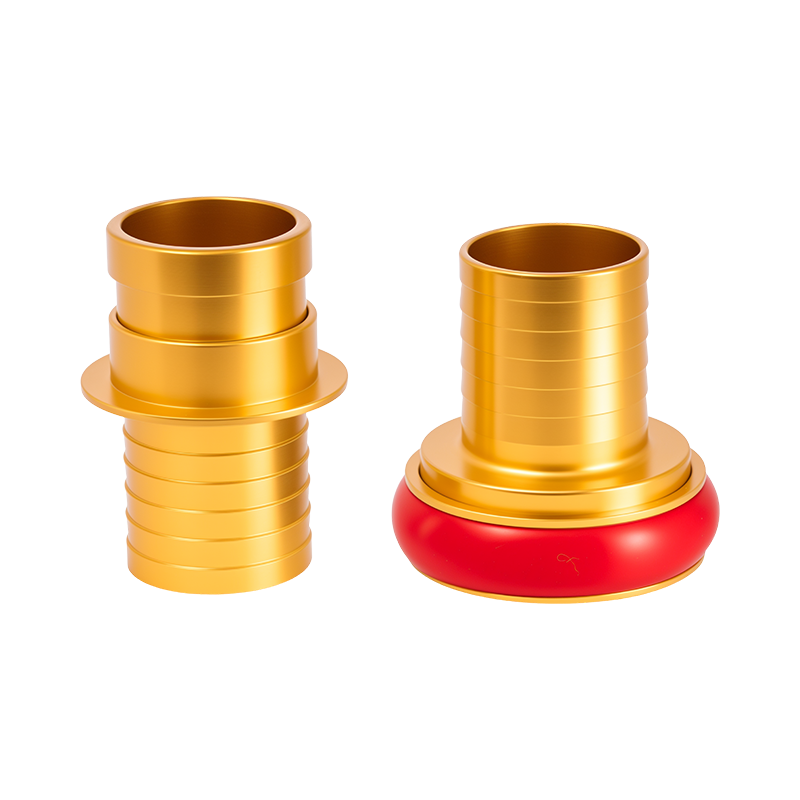
Variation in Forestry Coupling Standards
- Different national standards define lug spacing and locking angles independently
- European and North American forestry systems use distinct geometries
- Some systems prioritize weight reduction over dimensional uniformity
Forestry couplings are not governed by a single global geometry. U.S. wildland equipment often follows USDA-based specifications, while European systems may rely on UNI or regional quick-connect formats. Even though all aim to achieve rapid hose deployment, the locking interfaces vary enough that direct connection between systems is frequently impossible without adapters. This fragmentation explains why mixed-equipment deployments require careful planning before field use.
Locking Geometry and Mechanical Fit Issues
- Bayonet-style lugs differ in diameter and engagement depth
- Rotation angles vary between 30° and 60° across systems
- Tolerance stacking reduces sealing alignment under pressure
Forestry couplings depend on lug engagement rather than threaded sealing. Small deviations in lug height or spacing prevent full rotation lock, resulting in partial engagement. Under water pressure, partially engaged couplings may hold briefly but tend to leak or separate during dynamic movement. Field technicians often report that couplings appear connected visually but fail under operational stress due to incomplete mechanical seating.
Hose Diameter Influence on Compatibility
- 25 mm, 38 mm, and 52 mm hoses dominate wildland operations
- Mixed diameter systems require reducers or adapters
- Incorrect diameter pairing causes flow turbulence at joints
Forestry hose systems are typically designed around lightweight, small-diameter hoses to maximize portability. However, different regions standardize slightly different nominal sizes. A coupling designed for 38 mm hose may not align properly with a 40 mm system even though they appear similar. This mismatch creates both mechanical connection issues and hydraulic inefficiencies, especially during extended hose lays in wildfire suppression.
Material Differences Affecting Field Compatibility
- Aluminum couplings deform more easily under impact load
- Brass variants offer higher resistance to thread and lug wear
- Mixed-material systems accelerate uneven corrosion at interfaces
Material selection influences long-term compatibility as much as geometry. Lightweight aluminum couplings are common in wildland operations to reduce carry weight, but they are more vulnerable to deformation when dropped on rock or hard ground. Even slight lug deformation reduces engagement reliability. Once deformation occurs, couplings may still connect but lose sealing integrity under pressure.
Compatibility Reference Table for Forestry Couplings
| System Type | Nominal Diameter | Connection Style | Interchangeability |
| US Forestry Coupling | 25–38 mm | Bayonet lug quick-connect | Limited cross-compatibility |
| European Forestry System (UNI 804 type) | 25–52 mm | Symmetrical quick-connect | Adapter required for US systems |
| Hybrid Wildland Adapter Systems | 38–52 mm | Mixed lug/reducer configurations | Partial compatibility depending on model |
| Threaded Forestry Transition Fittings | Varies | NST / BSP threaded interface | Full compatibility via adapter |
Pressure and Flow Behavior at Connection Points
- Forestry hoses typically operate at lower pressure ranges than structural lines
- Rapid pump activation introduces transient pressure spikes
- Small diameter hoses amplify friction loss across long lays
Even though forestry couplings are not designed for extreme pressures, they still experience short pressure surges during pump engagement. These transient spikes test the integrity of partially compatible couplings. Incompatible systems often show leakage only during these dynamic pressure changes, while remaining sealed under static conditions. This behavior complicates field diagnosis of coupling compatibility problems.
Operational Field Observations
- Mixed-equipment deployments increase reliance on adapters
- Wear accumulation reduces interchange reliability over time
- Field repairs often involve temporary coupling substitution rather than full replacement
Wildland fire crews frequently operate with mixed inventory sourced from different procurement cycles. As equipment ages, slight wear in lug geometry reduces interchange precision even within the same standard. Temporary adapters become essential for maintaining operational continuity, although each additional interface introduces a potential leakage or failure point.
Forestry hose couplings are engineered for speed and portability rather than universal compatibility. Variations in national standards, mechanical geometry, and material tolerances create inherent limits in interchangeability. While adapters bridge many of these gaps, true plug-and-play compatibility across all forestry systems does not exist. Understanding these constraints helps reduce field connection failures and improves reliability during wildfire suppression operations.
Related Products


-
 (+86) 18968568369
Give Us A Call
-
 [email protected]
Drop Us a Line
-
 No. 32, Mechanical and Electrical Industrial Park, Donghai Avenue, Yuhuan City

Zhejiang Taizhou Honghe Technology Co., Ltd. is an emerging enterprise focusing on the research and development, production and sales of fire fighting equipment.
© 2025 Zhejiang Taizhou Honghe Technology Co., Ltd.
Storz Coupling & Firefighting Equipment Factory
