


 русский
 Español
 Deutsch
 عربى
عربى
Industry News


Brass or Aluminum? Comparing Female Fire Hose Coupling Options
 2026.10.09
 Industry News
Content
- 1 1. Brass and Aluminum: Understanding the Main Differences
- 2 2. Brass Couplings for Demanding Installation Conditions
- 3 3. Aluminum Couplings for Weight-Sensitive Equipment
- 4 4. Which Material Fits Your Purchasing Requirements?
- 5 5. Technical Details Buyers Should Confirm Before Ordering
- 6 6. Cost Evaluation for Distributors and Project Buyers
- 7 7. How Honghe Supports Informed Coupling Purchases
- 8 Match the Material to the Application
Material choice can affect the weight, durability, connection stability, and purchasing cost of firefighting equipment. Brass and aluminum are two common options for hose coupling components, but their performance characteristics differ across installation environments and operating requirements. At Honghe, we recognize that distributors, fire equipment wholesalers, and project buyers need to evaluate these differences before confirming their specifications.
A female fire hose coupling connects compatible hose assemblies, adapters, valves, or other firefighting components. Its internal thread or coupling structure must match the corresponding connection, while the selected material needs to suit the intended service conditions. Comparing brass with aluminum helps purchasing teams prepare more accurate specifications and reduce compatibility concerns during equipment installation.
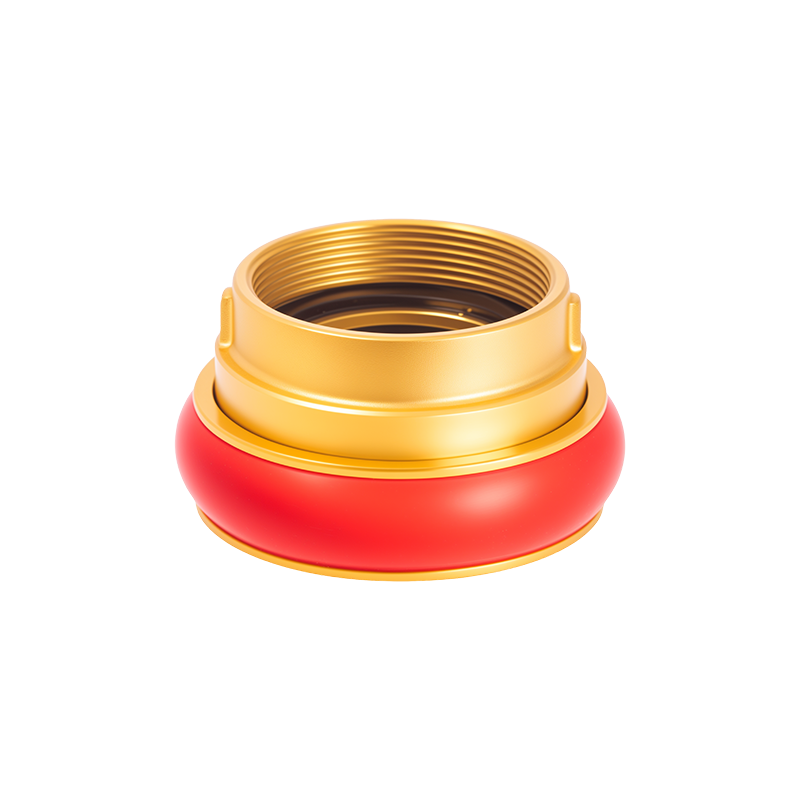
1. Brass and Aluminum: Understanding the Main Differences
Both materials can serve firefighting connection applications, provided the component design, manufacturing quality, and pressure rating meet the requirements of the intended system. Their differences become clearer through weight, corrosion behavior, mechanical properties, and overall purchasing considerations.
| Comparison Factor | Brass | Aluminum Alloy |
| Material density | Approximately 8.4–8.7 g/cm³, depending on alloy | Approximately 2.7 g/cm³ for common alloys |
| Weight | Relatively heavy | Lightweight |
| Corrosion behavior | Good resistance in many water-service environments; alloy selection remains important | Protective oxide layer; susceptible to localized corrosion in certain conditions |
| Mechanical properties | Depends on brass grade, component design, and manufacturing process | Depends on alloy grade, temper, and manufacturing process |
| Material cost | Generally higher than comparable aluminum material | Often lower by raw-material weight, although finished-part costs vary |
| Common purchasing consideration | Durability and compatibility with fixed installations | Reduced carrying weight and easier handling |
The density figures above are general material references rather than specifications for a finished coupling. Actual component weight depends on dimensions, wall thickness, thread geometry, and manufacturing design. Buyers should request product-specific data rather than estimate finished-part performance from material density alone.
2. Brass Couplings for Demanding Installation Conditions
Brass contains copper and zinc, with additional elements present in certain grades. Its mechanical properties and corrosion behavior make it suitable for various fixed firefighting installations and industrial connection systems.
Key Characteristics of Brass
- Corrosion resistance: Suitable brass grades can provide reliable service in many water-related applications. Actual resistance depends on water chemistry, temperature, alloy composition, and exposure conditions.
- Thread machining: Brass can be machined into accurately formed internal threads, helping manufacturers meet specified connection dimensions.
- Mechanical durability: The selected alloy and component design determine resistance to thread wear, impact, and repeated connection cycles.
- Installation suitability: The additional weight may be acceptable for stationary hose cabinets, building fire protection systems, and fixed connection points.
Applications Worth Considering
Brass may suit purchasing projects involving indoor fire hose cabinets, fixed water supply connections, and industrial installations that prioritize material compatibility and durability. Buyers working with coastal facilities or marine equipment should confirm the specific brass grade and its resistance to the relevant exposure conditions instead of assuming that every brass alloy performs equally well in saltwater.
Another technical consideration is dezincification, a corrosion process that selectively removes zinc from susceptible brass alloys. Applications involving aggressive water chemistry may require a dezincification-resistant grade or another material specified by the project engineer.
3. Aluminum Couplings for Weight-Sensitive Equipment
Aluminum alloys are widely used in portable firefighting equipment because their low density helps reduce the weight of individual components. This characteristic can be valuable for fire crews, mobile response teams, and distributors supplying equipment that is handled frequently.
Practical Benefits of Aluminum
- Lower component weight: Aluminum fittings can make hose assemblies easier to transport and handle, particularly across equipment inventories containing numerous connectors.
- Material economy: Aluminum may offer a cost advantage in suitable designs, although machining, surface treatment, and production volumes also affect the final quotation.
- Protective surface oxide: Aluminum naturally forms an oxide layer. Suitable anodizing or other specified surface treatments may provide additional protection.
- Portable equipment applications: Weight reduction can be a practical consideration for mobile hose assemblies and firefighting equipment carried by personnel.
Aluminum still requires careful material and environmental assessment. Chloride exposure, trapped moisture, damaged surface treatments, and contact with dissimilar metals can increase corrosion risks under certain conditions. Buyers should verify the alloy, finish, and installation requirements before approving an aluminum connection for coastal, marine, or chemically aggressive environments.
4. Which Material Fits Your Purchasing Requirements?
At Honghe, we recommend assessing the actual application rather than making a purchasing decision based on material price alone. A fitting intended for a fixed fire hose cabinet may have different priorities from a connector carried on mobile equipment. The following comparison offers a practical starting point for procurement discussions.
| Purchasing Scenario | Material to Evaluate | Important Checks |
| Fixed indoor fire hose cabinet | Brass or aluminum, according to system specifications | Connection standard, working pressure, corrosion conditions |
| Portable firefighting equipment | Aluminum may be worth considering | Weight, impact resistance, alloy grade, surface finish |
| Coastal or marine installation | Brass or a specifically approved corrosion-resistant alternative | Salt exposure, alloy compatibility, galvanic corrosion protection |
| Industrial fire protection system | Material specified for the operating environment | Pressure requirements, fluid chemistry, temperature, applicable standards |
| Wholesale distribution inventory | Both materials may serve different customer segments | Regional demand, connection types, stocking plans, documentation |
This table is intended as a procurement reference, not a universal material approval. Final decisions should follow the applicable fire protection design, product certification, and manufacturer specifications.
5. Technical Details Buyers Should Confirm Before Ordering
Material comparison is only part of the purchasing process. Even a well-manufactured coupling may be unsuitable for a project if its connection geometry or pressure rating does not match the existing equipment.
Connection Dimensions and Thread Standards
- Nominal size: Confirm the specified diameter and the dimensions of the mating connection.
- Thread type: Identify the required standard, such as NPT, BSPP, or BSPT, where applicable. These thread forms are not automatically interchangeable.
- Sealing method: Verify whether the design seals through a gasket, an O-ring, a tapered thread, or another specified interface.
- Connection configuration: Confirm whether the component requires an internally threaded end, an externally threaded end, or a quick-connect coupling profile.
Pressure Ratings and Quality Documentation
Working pressure must be checked against the complete hose assembly and the applicable system requirements. Buyers should not assume that brass automatically supports a higher pressure than aluminum, or that two couplings made from the same material share an identical rating. Wall thickness, geometry, manufacturing quality, and testing procedures all affect pressure performance.
Before confirming an order, procurement teams should request relevant technical documents, including:
- Product drawings and dimensional tolerances.
- Material grade or composition documentation.
- Specified working pressure and applicable test results.
- Surface treatment details, where applicable.
- Relevant product conformity documents and test records required by the destination market.
Pressure testing should follow the applicable product standard and the manufacturer's documented procedure. A test result for an individual fitting should not be treated as proof that the entire hose assembly is compliant.
6. Cost Evaluation for Distributors and Project Buyers
The quoted unit price is only one part of the purchasing calculation. Buyers should also consider the expected service environment, handling requirements, compatibility with existing inventory, and documentation needed for their target market.
- Compare equivalent specifications: Request quotations based on the same nominal size, thread standard, pressure requirement, material grade, and surface treatment.
- Review the total landed cost: Include packaging, freight, import duties, and any required inspection or certification expenses.
- Consider inventory compatibility: Standardizing connection types across suitable product groups can simplify stock planning and reduce confusion during order fulfillment.
- Evaluate service conditions: A lower purchase price may not provide a financial benefit if the selected material is unsuitable for the installation environment.
Honghe encourages buyers to provide complete technical requirements during the quotation stage. Clear specifications help us assess the requested configuration and communicate the relevant product details more accurately.
7. How Honghe Supports Informed Coupling Purchases
At Honghe, we understand that international buyers need clear product information to compare connection components across different projects and markets. Material, size, thread configuration, pressure requirements, and intended application all contribute to a workable purchasing specification.
Our approach focuses on discussing the customer's actual requirements before the product configuration is confirmed. Buyers can prepare the following information to support a more efficient inquiry:
- Required coupling type and nominal size.
- Preferred material and intended operating environment.
- Thread standard, mating equipment details, or reference drawings.
- Required working pressure and applicable compliance requirements.
- Estimated order volume, packaging preferences, and destination market.
Providing these details allows the purchasing discussion to focus on compatibility, technical suitability, and the documentation required for the project rather than relying on material names alone.
Match the Material to the Application
Brass and aluminum each have a place in firefighting connection equipment. Brass can be a suitable option for specified fixed installations and environments that demand careful corrosion resistance, while aluminum offers a clear weight advantage for portable equipment and mobile applications. Neither material should be approved without checking its grade, design, connection dimensions, and pressure rating.
At Honghe, we encourage distributors, contractors, and purchasing teams to compare complete product specifications before making a final decision. A well-defined requirement helps establish a suitable connection, supports reliable equipment integration, and makes supplier quotations easier to evaluate. Share your application details and technical requirements with our team to discuss the appropriate hose adapter configuration for your project.
Related Products



-
 (+86) 18968568369
Give Us A Call
-
 [email protected]
Drop Us a Line
-
 No. 32, Mechanical and Electrical Industrial Park, Donghai Avenue, Yuhuan City

Zhejiang Taizhou Honghe Technology Co., Ltd. is an emerging enterprise focusing on the research and development, production and sales of fire fighting equipment.
© 2025 Zhejiang Taizhou Honghe Technology Co., Ltd.
Storz Coupling & Firefighting Equipment Factory
