


 русский
 Español
 Deutsch
 عربى
عربى
Home / News / Industry News / Hidden Leak Points in Quick Water Hose Couplings Across Mixed Fittings
Industry News


Hidden Leak Points in Quick Water Hose Couplings Across Mixed Fittings
 2026.07.03
 Industry News
Content
- 1 Structural Weak Points Inside Mixed Coupling Systems
- 2 Forestry Quick Connect Coupling Leak Behavior
- 3 Female Threaded Fire Hose Reducing Adapter Leakage Patterns
- 4 Male Thread Tube Teeth Adapter Leak Formation
- 5 Aluminium Alloy Fire Hose Coupling Micro-Leak Risks
- 6 System-Level Leak Interaction in Mixed Couplings
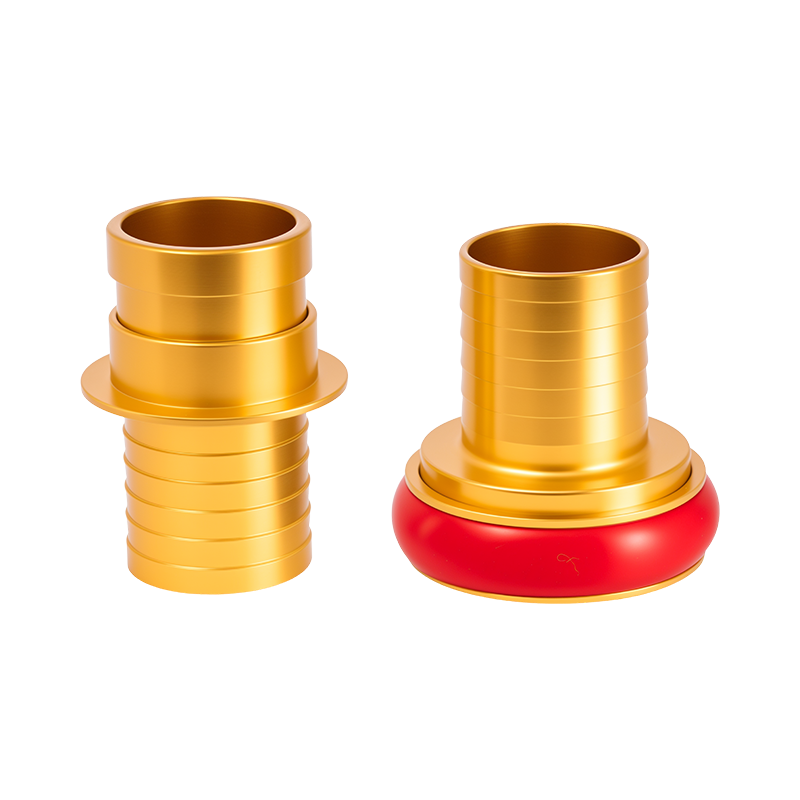
Water hose systems often appear simple from the outside, yet internal sealing behavior becomes complex once different coupling types are combined. Mixed fittings such as forestry connectors, fire hose adapters, and threaded tube interfaces introduce multiple sealing standards into one flow line. Even small geometry mismatches may trigger moisture escape that is difficult to trace visually. This discussion focuses on quick couplings for water hose used across mixed assemblies and the subtle leak sources that often remain unnoticed during installation or operation.
Structural Weak Points Inside Mixed Coupling Systems
Seal Interface Mismatch Zones
Leakage often originates at the transition between sealing systems rather than inside a single coupling body. Push-to-connect designs rely on O-rings and collet teeth, while forestry quick connectors depend on claw locking pressure. Fire hose reducers rely on gasket compression. Combining these systems creates uneven compression zones where sealing forces do not align.
- O-ring compression imbalance caused by mismatched insertion depth
- Claw misalignment in forestry couplings under angular stress
- Gasket flattening inside threaded reducers after repeated tightening cycles
Industry testing shows that even a 0.2–0.4 mm deviation in seating depth may reduce sealing efficiency by nearly 18–25% in low-pressure water lines.
Material Transition Stress Points
Different metals and polymers expand at different rates under pressure and temperature shifts. Aluminium alloy couplings paired with brass threaded adapters often develop micro-gaps after thermal cycling.
- Aluminium expands faster under heat exposure
- Brass threads retain rigid shape, resisting deformation
- Elastomer seals experience compression set over repeated cycles
These mismatched behaviors create microscopic channels that are not visible during dry testing but become active once fluid pressure stabilizes.
Forestry Quick Connect Coupling Leak Behavior
Claw Lock Pressure Distribution Issues
Forestry connectors rely on rotational claw engagement. Mixed systems often pair these with industrial hose ends that were not designed for rotational locking. The result is uneven pressure distribution across sealing rings.
- Partial claw engagement reduces sealing force consistency
- Dust or resin contamination prevents full seating
- Side-load stress distorts sealing ring geometry
Under field conditions, pressure ranges of 20–40 bar can exaggerate these micro-defects, especially where sealing rings operate near their upper compression limit.
Hidden Leak Channels Behind Locking Teeth
Forestry quick connectors often appear secure externally, yet leakage forms behind the claw engagement area. This region is not always directly compressed by the sealing gasket, leaving a bypass path for water flow.
| Leak Location | Cause | Visibility Level |
| Claw contact zone | Uneven lock tension | Low |
| Gasket edge | Compression fatigue | Medium |
| Body interface gap | Thread mismatch stress | Very Low |
Female Threaded Fire Hose Reducing Adapter Leakage Patterns
Thread Engagement Depth Variation
Threaded reducers introduce one of the most common hidden leak pathways in mixed assemblies. Inconsistent thread pitch alignment causes uneven axial load distribution across sealing washers.
- Partial thread engagement reduces gasket compression uniformity
- Cross-standard threads create micro spiral leakage paths
- Over-tightening flattens sealing washers beyond elastic recovery
Fire hose reducers typically operate under moderate to high flow rates, so even small imperfections may amplify leakage volume over time.
Sealing Washer Deformation Zones
Rubber sealing washers inside fire hose adapters experience uneven pressure distribution when paired with non-standard male connectors. Deformation often occurs on one side of the washer first, gradually expanding into a full bypass channel.
Male Thread Tube Teeth Adapter Leak Formation
Micro-Cut Damage from Tube Insertion
Tube teeth adapters rely on internal barbs or serrated edges to grip tubing. During repeated assembly cycles, these teeth may create micro-cuts in tubing walls.
- Repeated insertion increases internal surface scoring
- Thin-wall tubing shows accelerated wear near bite zones
- Pressure pulsation enlarges micro-cracks over time
These micro-cuts act as capillary pathways, especially under low-viscosity water flow conditions.
Retention Force vs Seal Integrity Conflict
Higher retention force improves mechanical hold but may compromise seal uniformity. Excessive tooth penetration distorts tubing circular geometry, which reduces O-ring contact stability in hybrid fittings.
Aluminium Alloy Fire Hose Coupling Micro-Leak Risks
Surface Hardness and Wear Interaction
Aluminium alloy couplings provide lightweight handling but show different wear behavior compared to brass or stainless steel interfaces. Repeated coupling cycles generate surface micro-scratches that gradually alter sealing alignment.
- Oxide layer formation affects sealing smoothness
- Mechanical abrasion increases micro-channel formation
- Seal compression becomes uneven after repeated cycles
Under pressure levels around 10–25 bar, these imperfections can gradually evolve into persistent seepage zones.
Temperature-Induced Expansion Gap Formation
Aluminium’s thermal response differs from steel-based adapters, creating expansion gaps during rapid temperature shifts. Mixed material assemblies magnify this effect, especially in outdoor hose systems exposed to direct sunlight and cold water flow transitions.
System-Level Leak Interaction in Mixed Couplings
Pressure Wave Reflection Inside Hybrid Lines
Mixed fittings cause reflection of pressure waves at every interface change. These reflections create micro-vibrations that loosen sealing stability over time.
- Pressure oscillation increases seal fatigue rate
- Interface vibration accelerates gasket compression loss
- Flow turbulence amplifies leakage initiation points
Hidden Leak Accumulation Behavior
Leakage in quick couplings for water hose rarely appears as a single failure point. Instead, multiple micro-leaks accumulate across different interfaces, eventually becoming visible drip or spray patterns under sustained operation.
System diagnostics often require staged pressure testing to isolate each coupling segment, since visual inspection alone cannot identify internal bypass channels formed by combined mechanical stress factors.
Mixed hose systems introduce layered mechanical interactions that influence sealing stability in unpredictable ways. Leak points are rarely isolated defects; they are the result of cumulative geometry mismatch, material response variation, and repeated mechanical cycling across different connector standards.
Understanding these interaction zones allows more precise diagnosis of water loss issues in complex hose assemblies without relying on surface-level inspection alone.
Related Products

-
 (+86) 18968568369
Give Us A Call
-
 [email protected]
Drop Us a Line
-
 No. 32, Mechanical and Electrical Industrial Park, Donghai Avenue, Yuhuan City

Zhejiang Taizhou Honghe Technology Co., Ltd. is an emerging enterprise focusing on the research and development, production and sales of fire fighting equipment.
© 2025 Zhejiang Taizhou Honghe Technology Co., Ltd.
Storz Coupling & Firefighting Equipment Factory
