


 русский
 Español
 Deutsch
 عربى
عربى


What Causes Fire Couplings to Jam or Lock
 2026.06.26
 Industry News
Content
- 1 Debris Intrusion Inside Locking Channels
- 2 Mechanical Deformation of Lug Structures
- 3 Lubrication Loss and Surface Friction Increase
- 4 Thermal Expansion and Pressure Stress Effects
- 5 Locking Performance Reference Table
- 6 Misalignment During Connection Process
- 7 Corrosion and Long-Term Wear Effects
- 8 Field Operation Insight
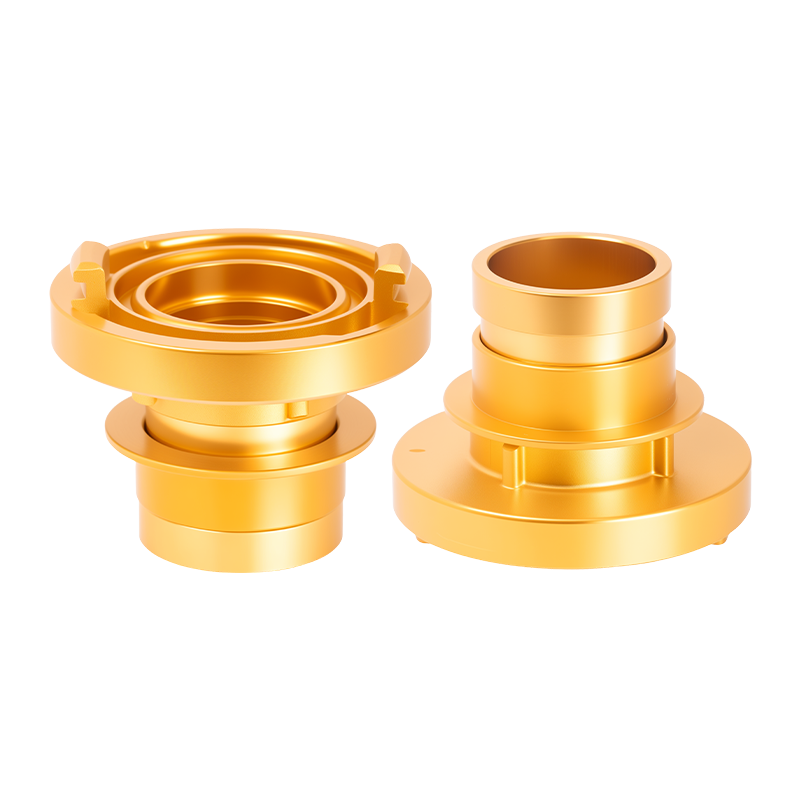
Field crews often encounter situations where an Instantaneous Fire Coupling refuses to disengage after use or becomes difficult to connect under routine pressure. Jammed or locked conditions rarely arise from a single mechanical defect. Instead, a combination of contamination, deformation, misalignment, and wear gradually restricts the movement of locking components. Maintenance records show that coupling seizure typically develops during repeated cycles of connection under harsh environmental exposure rather than sudden breakdown events.
Debris Intrusion Inside Locking Channels
- Sand and fine particles accumulate inside lug grooves
- Carbon residue from pump systems contaminates internal surfaces
- Organic debris from wildland environments obstructs rotation paths
Locking mechanisms in fire couplings depend on smooth rotation or axial engagement of metal lugs. Once particulate matter enters the groove interface, friction increases significantly. Even small grains of sand can block full rotation, preventing proper locking or release. Wildland environments present a higher risk due to constant exposure to ash, soil, and vegetation fragments.
Mechanical Deformation of Lug Structures
- Impact damage bends lug edges and reduces engagement clearance
- Repeated hammering during coupling accelerates edge rounding
- Misalignment during connection creates uneven stress points
Couplings frequently suffer physical impact during transport and deployment. Once lug geometry is slightly deformed, the rotational path becomes inconsistent. A coupling may still connect but resist disengagement due to uneven force distribution across locking surfaces. Over time, repeated stress further worsens alignment, increasing the probability of full mechanical seizure.
Lubrication Loss and Surface Friction Increase
- Factory-applied lubrication wears off after repeated use
- Dry metal contact increases torque required for rotation
- Contaminated grease forms abrasive paste instead of lubrication
Locking components often rely on minimal lubrication to maintain smooth operation. Over time, water exposure and cleaning processes remove protective films. Once lubrication is lost, metal-to-metal friction increases significantly, making both locking and unlocking more difficult. In contaminated environments, remaining grease can mix with debris, forming abrasive compounds that accelerate wear.
Thermal Expansion and Pressure Stress Effects
- Heat exposure causes slight dimensional changes in metal components
- High-pressure flow introduces axial load on locking interfaces
- Repeated pressurization cycles shift alignment tolerance
Fireground conditions expose couplings to fluctuating temperatures from ambient heat, engine exhaust, and water flow. Thermal expansion can reduce clearance between mating parts, especially in precision-machined systems. Combined with internal pressure forces, locking components may tighten beyond intended tolerances, resulting in difficulty during disconnection after operation.
Locking Performance Reference Table
| Condition | Operating Influence | Mechanical Response | Risk of Jamming |
| Clean environment | Minimal debris exposure | Smooth rotation and release | Low |
| Sandy or dusty field | Particle ingress into lug channel | Increased friction during rotation | Moderate |
| Impact-damaged coupling | Lug deformation from drops | Partial engagement or seizure | High |
| High-pressure operation | Axial load on locking system | Tightened interface after use | Moderate to high |
Misalignment During Connection Process
- Cross-threading effect in threaded variants restricts disengagement
- Partial engagement of lugs creates uneven load distribution
- Twisted hose tension transfers force into coupling body
Improper alignment during connection often creates internal stress points. Even slight angular deviation can force lugs to engage unevenly, increasing resistance during disconnection. Hose tension further amplifies this issue by applying rotational force to the coupling body, effectively locking it under load.
Corrosion and Long-Term Wear Effects
- Surface oxidation increases roughness of mating surfaces
- Pitting corrosion reduces smooth contact area
- Material loss alters original dimensional tolerance
Exposure to moisture and chemicals gradually alters the surface condition of coupling components. Corrosion introduces micro-pits that act as mechanical anchors, increasing resistance during rotation. As material loss progresses, original tolerances no longer align, resulting in persistent sticking or partial locking conditions.
Field Operation Insight
- Routine cleaning significantly reduces jamming incidents
- Replacement of worn locking lugs restores smooth disengagement
- Standardized handling procedures reduce impact-related deformation
Maintenance logs consistently show that jamming issues decline sharply after implementing regular inspection and cleaning routines. Attention to lug condition and alignment during connection plays a central role in maintaining reliable operation. Even heavily used couplings can remain functional when wear is monitored and addressed before deformation becomes severe.
Related Products

-
 (+86) 18968568369
Give Us A Call
-
 [email protected]
Drop Us a Line
-
 No. 32, Mechanical and Electrical Industrial Park, Donghai Avenue, Yuhuan City

Zhejiang Taizhou Honghe Technology Co., Ltd. is an emerging enterprise focusing on the research and development, production and sales of fire fighting equipment.
© 2025 Zhejiang Taizhou Honghe Technology Co., Ltd.
Storz Coupling & Firefighting Equipment Factory
