


 русский
 Español
 Deutsch
 عربى
عربى
Industry News


How Does Self-locking Storz Coupling Improve Emergency Connections
 2026.08.21
 Industry News
Content
- 1 The Growing Demand for Faster Emergency Connection Solutions
- 2 How Self-locking Storz Coupling Technology Works
- 3 Key Applications of Self-locking Storz Coupling
- 4 Material Selection and Structural Features
- 5 Technical Parameters Users Focus On
- 6 Why Self-locking Designs Are Changing Hose Connection Methods
- 7 Future Development Trends of Storz Coupling Systems
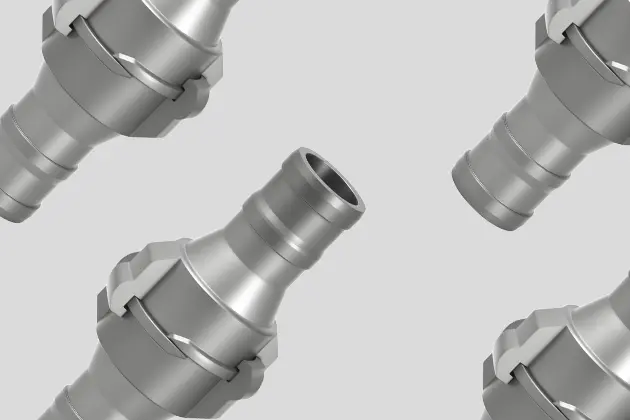
Emergency response operations depend on equipment that can be connected quickly, operated safely, and adapted to different working conditions. In firefighting, industrial fluid transfer, and rescue applications, connection components directly affect the speed and reliability of water delivery systems. Among modern connection solutions, Self-locking Storz Coupling is attracting attention because of its quick connection structure and improved locking performance.
Unlike traditional threaded connectors that require precise alignment and multiple rotations, Storz coupling systems use a symmetrical lug-and-slot structure that allows both ends to connect through a quarter-turn locking action. This design enables firefighters and operators to establish hose connections rapidly without searching for separate male and female fittings.
The development of self-locking technology further improves the stability of this connection method. By integrating locking mechanisms into the coupling structure, modern designs help reduce accidental loosening caused by vibration, movement, or high-pressure operation.
The Growing Demand for Faster Emergency Connection Solutions
Emergency environments often involve limited visibility, high pressure, and strict time requirements. Equipment must perform consistently even under difficult conditions. This has increased demand for connection systems that combine simple operation with dependable performance.
- Rapid hose deployment: Quick-locking structures allow hoses and equipment to be connected with fewer operating steps.
- Reduced connection errors: Symmetrical designs minimize confusion caused by different connector ends.
- Stable pressure transfer: Secure locking helps maintain connection integrity during water delivery.
Storz systems are widely used in firefighting because they provide fast connection between hoses, hydrants, pumps, and other water supply equipment. The connection method is especially suitable for large-diameter hoses where quick deployment is important.
How Self-locking Storz Coupling Technology Works
A Self-locking Storz Coupling combines the traditional Storz connection principle with an additional locking structure. The basic Storz system uses two identical coupling halves that connect by aligning hooks and slots, then rotating them to create a secure seal.
Integrated Locking Structure
The self-locking mechanism provides additional holding force after connection. Depending on the product design, locking components may include locking rings, spring mechanisms, or specially designed fastening structures.
- Prevents unexpected rotation during equipment operation.
- Improves connection stability in mobile firefighting applications.
- Supports safer operation in high-pressure environments.
Tool-Free Connection Operation
One important advantage of Storz coupling technology is its simple operating method. Operators can connect hoses by aligning the coupling heads and rotating them into position. This reduces the need for additional tools during emergency deployment.
Key Applications of Self-locking Storz Coupling
The application range of Self-locking Storz Coupling extends beyond traditional fire hoses. As industries require more flexible fluid connection solutions, self-locking designs are being considered for various systems.
| Application Field | Connection Requirement | Role of Self-locking Storz Coupling |
| Firefighting vehicles | Fast hose connection during emergency response | Supports rapid deployment and secure water transfer |
| Industrial water systems | Frequent connection and disconnection | Provides convenient operation for temporary pipelines |
| Municipal fire protection | Compatibility between different equipment | Helps connect various hose and supply systems |
| Rescue equipment | Portable and reliable connections | Improves equipment flexibility in field conditions |
Material Selection and Structural Features
The performance of a Storz coupling depends on both the locking design and material quality. Aluminum alloy is commonly used in firefighting coupling products because it provides a balance between lightweight construction and mechanical strength. Storz connectors are commonly manufactured from materials such as aluminum or brass, with forged structures often preferred for demanding firefighting applications.
Common Material Options
- Aluminum alloy: Lightweight, corrosion-resistant, and suitable for portable firefighting equipment.
- Stainless steel: Provides strong corrosion resistance for special environments.
- Brass: Offers durability for certain traditional connection applications.
Technical Parameters Users Focus On
Before applying a Self-locking Storz Coupling system, users usually evaluate several technical factors. These parameters influence whether the coupling can match existing hoses, pumps, and operating conditions.
| Technical Item | Typical Consideration | Application Influence |
| Coupling Size | Common options include 2 inch, 3 inch, 4 inch, 5 inch, and 6 inch | Determines hose compatibility and flow capacity |
| Material | Aluminum alloy, stainless steel, brass | Affects weight, durability, and corrosion resistance |
| Locking Method | Cam locking or additional self-locking structure | Improves connection security |
| Pressure Rating | Depends on design and application requirements | Ensures safe operation under working pressure |
Why Self-locking Designs Are Changing Hose Connection Methods
Traditional hose connection systems may require more manual steps, especially during emergency situations. Self-locking technology addresses this challenge by adding security features while maintaining the quick-connect advantages of Storz systems.
This development is valuable for organizations that manage large amounts of firefighting equipment. Fire departments, industrial facilities, and emergency teams can benefit from connection systems that reduce operational complexity while maintaining dependable performance.
- Improved operational confidence: Locking feedback helps operators confirm connection status.
- Better equipment compatibility: Standardized Storz interfaces support connections between different devices.
- Enhanced field performance: Stable locking structures support demanding environments.
Future Development Trends of Storz Coupling Systems
Future Storz coupling designs are expected to focus on stronger materials, smarter locking structures, and wider compatibility. As emergency equipment continues to develop, users will require connection products that provide both convenience and dependable performance.
Possible development directions include:
- Advanced alloy materials: Improving strength while maintaining lightweight characteristics.
- Enhanced locking systems: Creating more secure connections for high-pressure applications.
- Smart monitoring features: Adding connection status detection for modern emergency equipment.
The development of Self-locking Storz Coupling reflects the changing needs of emergency connection systems. By combining quick-connect operation with improved locking performance, these couplings provide a practical solution for firefighting and industrial fluid transfer applications.
As equipment requirements continue to evolve, self-locking technology will play an important role in creating safer, more adaptable, and easier-to-operate hose connection systems. The combination of standardized Storz design and advanced locking features makes this technology valuable for future emergency response applications.
Related Products

-
 (+86) 18968568369
Give Us A Call
-
 [email protected]
Drop Us a Line
-
 No. 32, Mechanical and Electrical Industrial Park, Donghai Avenue, Yuhuan City

Zhejiang Taizhou Honghe Technology Co., Ltd. is an emerging enterprise focusing on the research and development, production and sales of fire fighting equipment.
© 2025 Zhejiang Taizhou Honghe Technology Co., Ltd.
Storz Coupling & Firefighting Equipment Factory
