


 русский
 Español
 Deutsch
 عربى
عربى
Industry News


Why Choose an Aluminum Fire Hydrant Cap for Outdoor Use?
 2026.03.13
 Industry News
Content
Fire hydrant systems operate outdoors year-round, exposed to rain, dust, temperature changes, and environmental contaminants. The integrity of the hydrant connection directly affects system readiness. An Aluminum Fire Hydrant Cap plays a critical role in protecting threaded outlets and maintaining clean, functional connections.
For municipalities, industrial facilities, and fire system contractors, the focus is practical: long-term durability, corrosion resistance, compatibility with existing standards, and a stable supply from a reliable Aluminum Fire Hydrant Cap Manufacturer.
Precision Threads and Sealing Performance
Thread accuracy is often overlooked, yet it is critical for long-term functionality. Loose or poorly machined threads may cause leakage or allow contaminants to enter.
An Aluminum Fire Hydrant Cap designed with precision-machined threads fits tightly onto the hydrant outlet. This secure engagement protects both the cap and the hydrant body from wear caused by repeated installation cycles.
Sealing performance depends on both thread fit and internal sealing structure. A well-designed cap reduces the risk of water intrusion and minimizes corrosion at the interface point. For facilities managing multiple hydrants, consistent thread accuracy simplifies maintenance procedures.
Working with an experienced Aluminum Fire Hydrant Cap Manufacturer provides access to standardized thread production aligned with common fire protection systems.
Impact Resistance and Long-Term Outdoor Exposure
Outdoor fire hydrants are often located along roads, in industrial yards, or in public areas. Accidental impact from vehicles or equipment can occur. While the cap is a relatively small component, structural strength remains important.
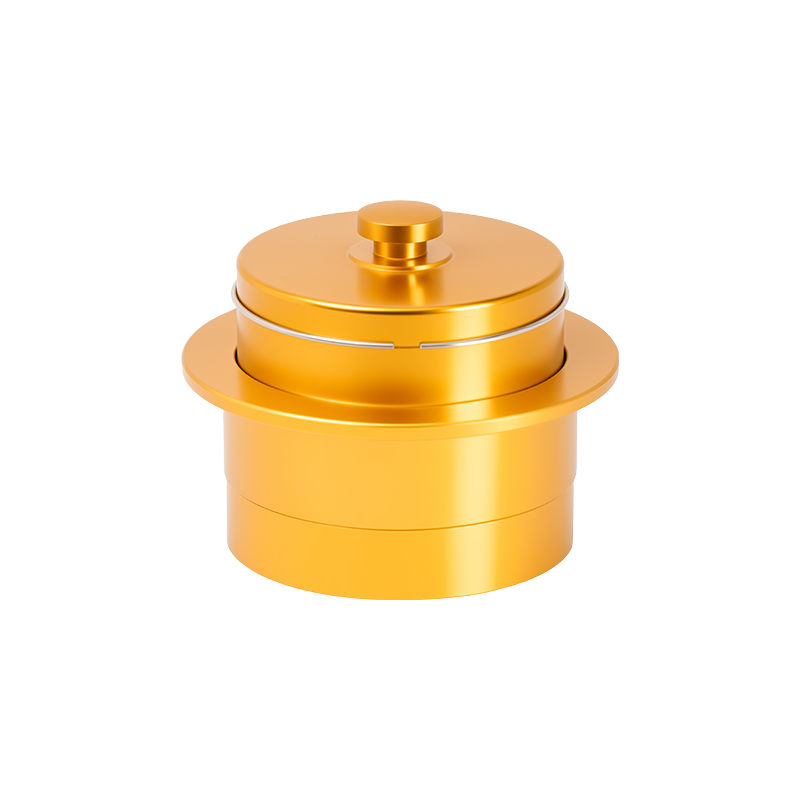
High-strength aluminum alloy provides resistance against deformation during moderate impact. Anodized surfaces also contribute to surface durability by adding a protective layer.
Long-term exposure to sun, rain, and seasonal temperature variation requires material stability. Aluminum alloy performs consistently across changing weather conditions, maintaining thread integrity and structural reliability.
Optional Anti-Theft Chain and Tamper Prevention
Loss or unauthorized removal of hydrant caps can create operational risks. To address this concern, many designs include an optional anti-theft chain.
This chain connects the Aluminum Fire Hydrant Cap to the hydrant body, reducing the likelihood of loss during use or maintenance. In public installations, this feature supports asset management and reduces replacement frequency.
Manufacturing Stability and Quality Control
Production reliability affects not only product consistency but also project timelines. Large-scale manufacturing facilities equipped with precision machinery are better positioned to deliver uniform quality across batches.
Partnering with a professional Aluminum Fire Hydrant Cap Manufacturer allows contractors and system integrators to maintain stable supply chains and predictable times.
Maintenance and Operational Efficiency
Routine hydrant inspections require periodic removal and reinstallation of caps. Lightweight aluminum construction simplifies this process, reducing handling effort while maintaining structural strength.
Because the Aluminum Fire Hydrant Cap protects against debris and moisture, maintenance teams spend less time cleaning threads before hydrant use. Clean, intact connections support rapid hose attachment when required.
An Aluminum Fire Hydrant Cap serves a focused but essential function in fire protection systems. Its role in sealing, protecting, and preserving hydrant connections directly impacts overall system readiness. Working with an experienced Aluminum Fire Hydrant Cap Manufacturer provides access to precision machining, corrosion-resistant materials, and customizable configurations suited to diverse installation environments.
Related Products

-
 (+86) 18968568369
Give Us A Call
-
 [email protected]
Drop Us a Line
-
 No. 32, Mechanical and Electrical Industrial Park, Donghai Avenue, Yuhuan City

Zhejiang Taizhou Honghe Technology Co., Ltd. is an emerging enterprise focusing on the research and development, production and sales of fire fighting equipment.
© 2025 Zhejiang Taizhou Honghe Technology Co., Ltd.
Storz Coupling & Firefighting Equipment Factory
