


 русский
 Español
 Deutsch
 عربى
عربى
Industry News


Why Is Storz Connection Gaining Ground in Large-Diameter Hose Systems
 2026.09.11
 Industry News
Content
Large-diameter fire hoses are designed to move substantial volumes of water, but the hose itself is only part of the water delivery system. The connection at each end also needs to support rapid assembly, reliable sealing, and sufficient flow capacity. This is where the storz hose connection has attracted attention in firefighting and other high-volume water transfer applications.
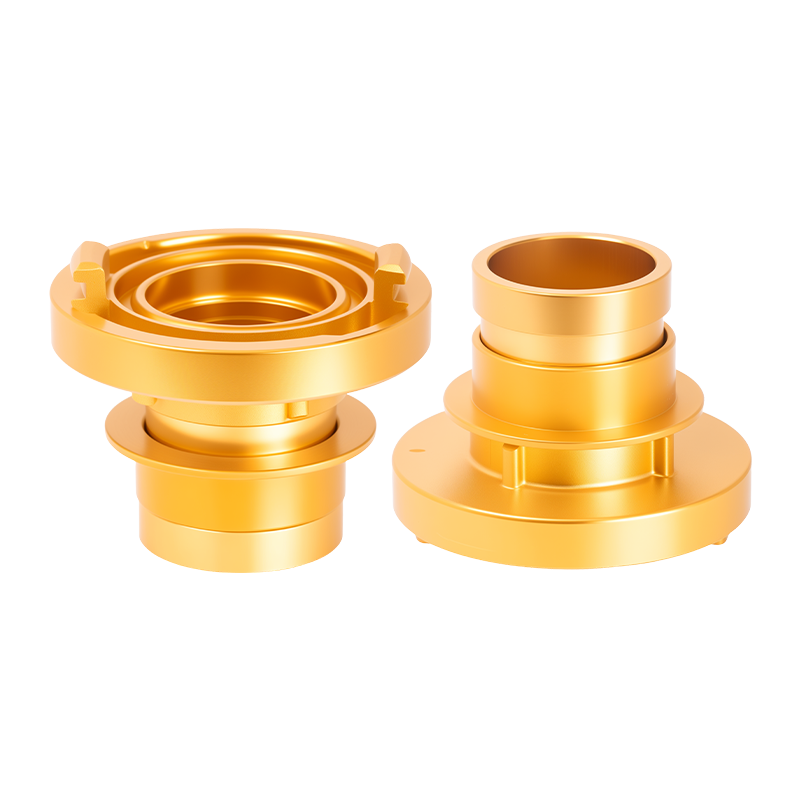
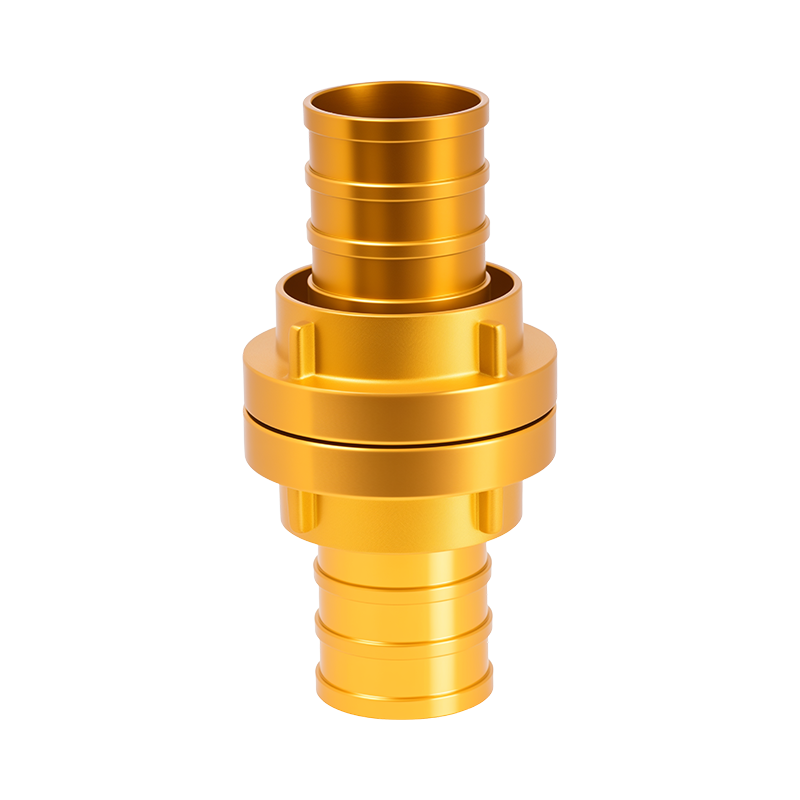
Unlike conventional threaded couplings, Storz uses a symmetrical connection structure. Both coupling halves have matching hooks and slots, allowing compatible ends to connect without identifying a male or female side. The connection is secured through a short rotational movement, while an internal gasket provides the sealing surface.
What Makes Storz Different From Threaded Couplings?
The difference is not simply about connection speed. The geometry of the coupling changes how a large hose line is assembled and managed in the field.
| Feature | Storz Connection | Traditional Threaded Coupling |
| Connection design | Symmetrical hook-and-slot system | Male/female threaded interface |
| Hose orientation | No male/female orientation required | Correct mating ends are required |
| Locking movement | Quarter-turn style engagement | Multiple thread rotations |
| Sealing | Internal gasket | Depends on coupling and thread configuration |
| Typical application focus | Large-diameter delivery and suction systems | Various hose and pipe connection systems |
This symmetrical design can be particularly useful with large-diameter hose. Fire crews do not need to determine which end of the hose should connect to a particular gendered fitting. That can simplify hose layout and reduce orientation issues during deployment.

Why Does Large Diameter Matter?
Large-diameter hose systems are intended to carry significant water volumes over supply routes. A connection with a relatively open internal passage can help preserve the flow path between the hose and connected equipment.
Commercial Storz ranges cover various nominal sizes. Current product specifications include sizes from approximately DN25 to DN150, while large-diameter configurations such as 4-inch, 5-inch, and 6-inch versions are also available for particular applications.
- Large waterway: Storz designs can provide a relatively unobstructed flow path compared with some connection geometries.
- Symmetrical coupling: Compatible ends can be joined without male/female identification.
- Compact locking action: The hook-and-slot mechanism uses a short rotational movement rather than long thread engagement.
- Multiple size options: Different coupling dimensions allow the system to be matched with different hose diameters and equipment.
Does Pressure Rating Change With Coupling Construction?
Yes. Storz products should not be treated as having a single universal pressure rating. Construction method, size, material, seal design, and applicable standard can all affect the rated performance.
For example, a current Storz product specification lists forged couplings with working pressure up to 16 bar, while a cast aluminum version of a similar nominal connection is specified at 6 bar. Another specification for Storz couplings requires PN16 performance with a nominal working pressure of 1600 kPa.
| Parameter | Example Specification |
| Connection type | Symmetrical quick-connect |
| Material options | Aluminum alloy, brass, stainless steel |
| Pressure example | PN16 / 16 bar |
| Seal temperature example | -25°C to +100°C |
| Large-size range example | DN100–DN150 and other configurations |
These figures are application examples rather than universal specifications. Buyers should match the coupling's certified rating with the hose, pump, hydrant, appliance, and operating pressure requirements.
Where Is the Storz Hose Connection Being Used?
The design is closely associated with firefighting, particularly large-diameter hose systems, but its application is broader than fireground supply.
- Fire apparatus: Large supply and suction hose connections.
- Fire department connections: Auxiliary water supply arrangements for sprinkler and standpipe systems.
- Industrial water transfer: Temporary high-volume water movement.
- Agricultural systems: Water transfer and irrigation hose assemblies.
- Emergency pumping: Situations requiring large hoses to be deployed and reconfigured repeatedly.
Its use across these applications reflects a practical characteristic: the same basic connection principle can accommodate repeated hose assembly without requiring a different male and female coupling for each end.
Are Storz Couplings Compatible With Every Fire Hose?
No. The absence of male and female ends does not mean every Storz fitting is automatically compatible with every other Storz fitting.
Coupling size and lug spacing are critical. Two fittings may both be described as Storz but still require matching dimensions and connection geometry. Standards and regional specifications can also differ. A transition between Storz and a threaded hydrant or appliance connection may require a suitable adapter.
Key Specifications to Verify
- Nominal coupling diameter
- Lug spacing and connection dimensions
- Working and test pressure
- Material and manufacturing method
- Gasket material and temperature range
- Applicable DIN, EN, NFPA, or regional requirements
Why Is Storz Attractive for Large-Diameter Systems?
The appeal of the storz hose connection comes from the way several design characteristics work together. Symmetrical engagement simplifies hose orientation, the quarter-turn connection reduces mechanical assembly movement, and large-diameter configurations support high-volume water transfer.
Its value therefore goes beyond simply making a hose connection faster. The design provides a different way to organize large hose systems around compatibility, connection geometry, flow passage, and field handling. As large-diameter water delivery continues to require flexible connection options, Storz remains a practical coupling format for firefighting and other demanding fluid-transfer applications.
Related Products

-
 (+86) 18968568369
Give Us A Call
-
 [email protected]
Drop Us a Line
-
 No. 32, Mechanical and Electrical Industrial Park, Donghai Avenue, Yuhuan City

Zhejiang Taizhou Honghe Technology Co., Ltd. is an emerging enterprise focusing on the research and development, production and sales of fire fighting equipment.
© 2025 Zhejiang Taizhou Honghe Technology Co., Ltd.
Storz Coupling & Firefighting Equipment Factory
