


 русский
 Español
 Deutsch
 عربى
عربى
Industry News


Will Your Fire Hose Coupling Connection Match Existing Equipment
 2026.10.16
 Industry News
Content
Replacing a fire hose fitting may seem straightforward, but matching a new component with an existing installation requires more than checking its nominal diameter. Different fire protection systems can use distinct thread profiles, coupling designs, sealing methods, and pressure ratings. At Honghe, we understand that distributors, contractors, and project buyers need to verify these details before ordering replacement parts or planning equipment upgrades.
A fire hose coupling connection must match its mating component and comply with the requirements of the intended system. A fitting that appears similar in size may still be incompatible with a hydrant, valve, nozzle, or hose assembly. Careful specification checks help buyers avoid unsuitable orders and support reliable equipment integration.
1. Why Nominal Size Is Not Enough
Nominal diameter provides a useful starting point, but it does not identify every characteristic required for a compatible connection. Two couplings may share a similar nominal size while using different thread standards or connection mechanisms.
Our team recommends checking the following details before confirming an order:
- Nominal size: Confirm the specified hose or connection size against the equipment documentation.
- Thread standard: Identify the exact designation rather than relying on visual similarity.
- Thread pitch and profile: Verify the thread geometry and pitch using suitable measuring tools or gauges.
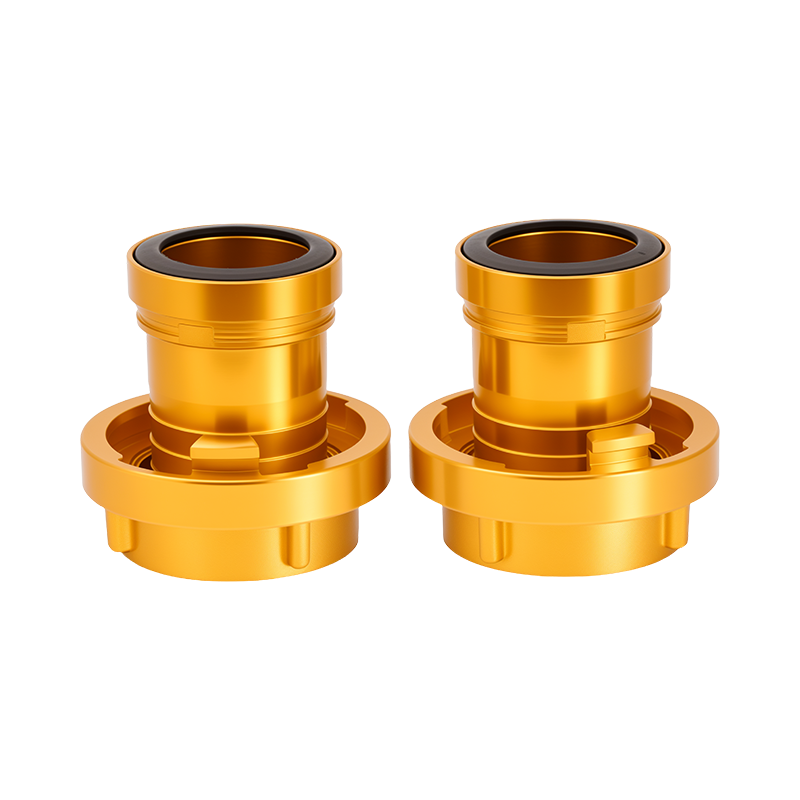
- Connection type: Establish whether the system uses threaded fittings, a Storz coupling, or another quick-connect design.
- Sealing arrangement: Check the gasket, O-ring, sealing face, or other specified sealing mechanism.
For example, NPT and BSP thread forms should not be treated as interchangeable simply because their dimensions appear close. A forced or incomplete connection can damage threads and compromise sealing performance.
2. Understand the Connection Standards Used in Your Market
Firefighting equipment is supplied to markets with different connection conventions. Identifying the applicable standard is particularly important for importers and contractors purchasing components from overseas manufacturers.
| Connection Type | Typical Market or Application | Purchasing Check |
| NH/NST threaded coupling | Many North American fire service systems | Verify the required thread designation and nominal size |
| Storz coupling | Common in European and various international applications | Confirm coupling size and compatible lug geometry |
| BSP threaded connection | Various UK-style and international industrial applications | Identify whether the specified thread is parallel or tapered |
| Regional instantaneous coupling | Markets using particular national or regional standards | Check the governing specification and mating profile |
These examples are general references, not a substitute for local regulations or project specifications. The same market may contain legacy equipment or specialized systems that use different connections. Buyers should confirm the required standard with the equipment manufacturer or responsible project engineer.
3. Can an Adapter Connect Different Coupling Standards?
An adapter may provide a practical connection between two otherwise incompatible interfaces. However, its suitability depends on the exact configuration at both ends, the installation environment, and the operating requirements of the fire protection system.
Details to Confirm Before Ordering an Adapter
- End configurations: Specify the connection type and size required at each end.
- Material compatibility: Consider corrosion exposure and contact between dissimilar metals.
- Pressure rating: Confirm that the adapter is rated for the intended operating conditions.
- Sealing design: Check that each interface uses the specified gasket or sealing arrangement.
- Compliance requirements: Verify whether the adapter must meet a particular standard or project approval.
At Honghe, we encourage buyers to provide photographs, technical drawings, or identification details for both mating components. This information helps clarify the required configuration before production or order confirmation. Any proposed adapter should be checked against the applicable fire protection design and approved operating requirements.
4. Check Pressure Ratings and Product Documentation
Connection compatibility alone does not establish that a fitting is suitable for service. A coupling must also meet the pressure, material, and performance requirements of the complete system.
Before placing an order, procurement teams should review:
- Product drawings and dimensional specifications.
- Material grade and surface treatment details.
- Rated working pressure and relevant test documentation.
- Applicable standards, certification records, and destination-market requirements.
- Gasket specifications and replacement requirements, where applicable.
Testing should follow the relevant product standard and manufacturer procedures. A successful trial connection does not independently prove pressure capability or regulatory compliance. Avoid forcing mismatched fittings together, and do not use unverified connections in operational fire protection systems.
5. How Honghe Helps Buyers Prepare Accurate Orders
At Honghe, we recognize that international purchasing often involves existing equipment, mixed inventories, and different regional requirements. Clear technical communication helps us understand the intended application and discuss a suitable coupling configuration with the customer.
To support your inquiry, prepare the following information:
- Required coupling type, nominal size, and thread standard.
- Details of the hose, hydrant, valve, or nozzle to be connected.
- Required material, operating pressure, and service environment.
- Drawings, photographs, or reference part numbers for existing equipment.
- Applicable compliance requirements and destination market.
Providing these details helps reduce ambiguity during quotation and supports more accurate product specification discussions. It also gives distributors and project buyers a clearer basis for comparing compatible products and planning replacement inventory.
A compatible fire hose connection depends on the complete interface specification, not nominal size alone. Thread standards, connection geometry, sealing arrangements, material properties, and pressure ratings all deserve attention before an order is confirmed.
Honghe encourages distributors, contractors, and fire equipment buyers to verify existing connection details before purchasing replacement couplings or adapters. Share your drawings, connection requirements, and application information with our team to discuss a configuration that matches your equipment and project specifications.
Related Products

-
 (+86) 18968568369
Give Us A Call
-
 [email protected]
Drop Us a Line
-
 No. 32, Mechanical and Electrical Industrial Park, Donghai Avenue, Yuhuan City

Zhejiang Taizhou Honghe Technology Co., Ltd. is an emerging enterprise focusing on the research and development, production and sales of fire fighting equipment.
© 2025 Zhejiang Taizhou Honghe Technology Co., Ltd.
Storz Coupling & Firefighting Equipment Factory
