


 русский
 Español
 Deutsch
 عربى
عربى

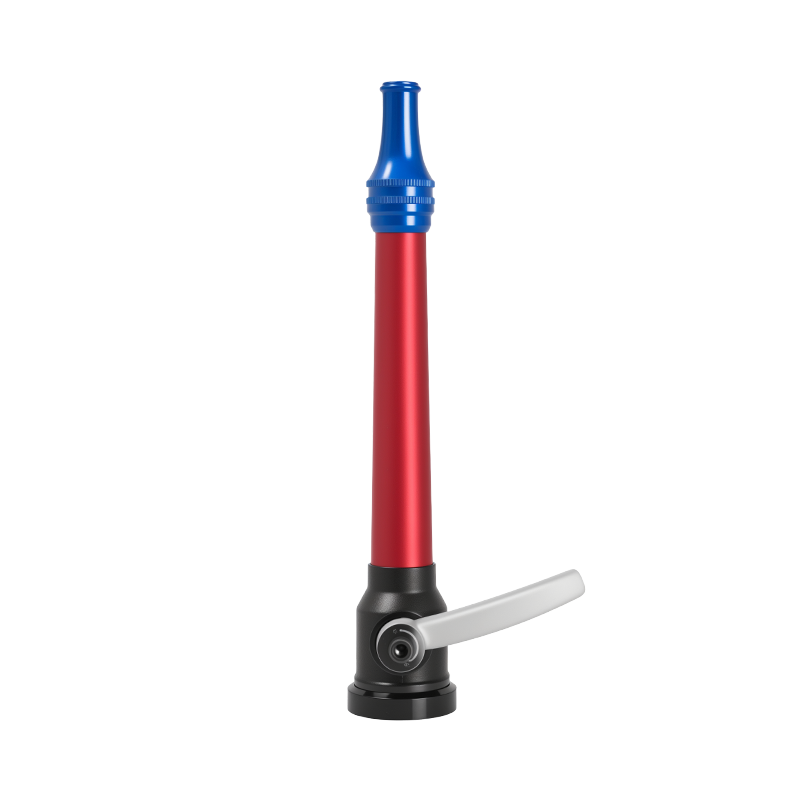
Zhejiang Taizhou Honghe Technology Co., Ltd. was established in 2019 as an emerging enterprise specializing in the R&D, manufacturing, and sales of firefighting equipment. It is a professional China Fire DC Water Gun manufacturer and wholesale Fire DC Water Gun factory. leveraging over a decade of industry experience.
Occupying a facility of over 2,000 square meters and powered by a dedicated team of more than 50 employees, including 3 technical engineers, the company is built for excellence.
Since its inception, Honghe Technology has adhered to the core principles of " Valuing Talent and Building Trust through Integrity." We bring together industry experts to integrate advanced international information technologies, management models, and business practices with the specific needs of domestic enterprises. Our commitment is to provide comprehensive solutions that enhance our clients' management efficiency and production capabilities. By doing so, we empower them to maintain a competitive edge in a dynamic market and achieve rapid, sustainable growth.

Fire Hose Nozzle in China
As a professional fire DC water gun manufacturer, Honghe's products are designed specifically for fire emergency response and high-pressure firefighting scenarios, offering significant advantages such as high strength, high stability, and precise water delivery.
Made from corrosion-resistant aluminum alloy or stainless steel, these DC water guns offer a sturdy structure that can withstand high-pressure water flow and ensure continuous, stable output. Their long-range and concentrated flow rate allows for a rapid generation of high-pressure DC water jets, effectively extinguishing fires at medium and long distances.
The gun's ergonomic design provides a comfortable grip and easy single-person operation. Its quick-release connector allows for flexible connection to a variety of fire hoses. The overall product features a strong seal and excellent leak-proof performance, making it suitable for firefighting systems in factories, warehouses, forests, and cities, providing users with an efficient, safe, and reliable firefighting solution.
About
Zhejiang Taizhou Honghe Technology Co., Ltd.
News
-
Product Role in Fire Response Systems Fire control environments in industrial zones often require directional water delivery tools that can ...
View More -
Understanding Aluminum Fire Hose Fittings Aluminum fire hose fittings are essential components in modern firefighting systems. These fitting...
View More -
Firefighting systems depend on stable and fast hose connections. The Instantaneous Fire Coupling plays a central role in linking hoses, pump...
View More -
Efficient firefighting systems rely on stable water transmission from pumps to nozzles. At the center of this connection network stands the ...
View More
Message Feedback
Fire DC Water Gun Industry knowledge
Q1: What is the role of a fire water nozzle in firefighting systems?
In firefighting operations, controlling water flow and spray pattern is essential for effective fire suppression. A Fire Water Nozzle is designed to regulate the direction, shape, and intensity of water discharged from a hose. By adjusting the outlet form, firefighters can switch between concentrated streams and wider spray patterns depending on the situation.
This component acts as the final control point in the water delivery system, making it a critical part of overall fire response equipment.
Q2: How does a fire hose nozzle support operational flexibility?
A Fire Hose Nozzle allows operators to adapt quickly to different fire scenarios. For example, a narrow stream can be used to reach distant flames, while a dispersed spray helps cool surfaces or protect personnel from heat exposure.
Manufactured to withstand high internal pressure, these nozzles are typically equipped with adjustable heads or valves. This design ensures consistent water output even when water supply conditions fluctuate.
Q3: What distinguishes a high pressure water gun from standard nozzles?
A High Pressure Water Gun is designed for applications where long-range and forceful water delivery is required. This type of equipment is often used in industrial fire protection, marine firefighting, or fixed installation systems.
Its internal structure is reinforced to handle elevated pressure levels without compromising stability. By maintaining a focused stream, the water gun enables targeted suppression in environments where access may be limited or fires are located at a distance.
Q4: What is meant by a fire DC water gun?
A Fire DC Water Gun refers to a nozzle or gun that delivers a direct current stream, producing a straight and concentrated flow of water. This discharge mode is commonly applied when penetration power is needed to reach the base of a fire.
Such equipment is valued for its predictable flow behavior and minimal dispersion. In controlled firefighting situations, a direct stream helps reduce water loss and improves accuracy.
Q5: How are materials selected for fire water nozzles?
Material selection is a key consideration in nozzle manufacturing. A Fire Water Nozzle is typically made from metals or reinforced alloys that resist corrosion and mechanical wear. These materials ensure durability under repeated exposure to water, heat, and impact.
Surface treatments may be applied to improve resistance to environmental conditions. For a High Pressure Water Gun, internal components are designed to maintain performance without deformation during prolonged use.
Q6: How does nozzle design influence firefighter safety?
Nozzle design directly affects handling comfort and operational control. A Fire Hose Nozzle is often shaped to allow secure gripping, even when gloves are worn. Balanced weight distribution reduces operator fatigue during extended firefighting efforts.
In addition, controlled spray patterns help reduce sudden reaction forces. A Fire DC Water Gun, for instance, delivers a stable stream that minimizes unexpected movement, contributing to safer handling in demanding environments.
Q7: What maintenance practices are important for water gun equipment?
Regular inspection ensures reliable performance during emergencies. Components of a High Pressure Water Gun should be checked for wear, blockage, or sealing issues. Valves and rotating parts require periodic cleaning to maintain smooth operation.
For portable systems, flushing the Fire Water Nozzle after use helps remove debris and prevent internal buildup. Proper storage also extends service life by protecting seals and surfaces from unnecessary damage.
Firefighting effectiveness depends heavily on precise water control at the point of discharge. Whether described as a Fire DC Water Gun, applied as a Fire Hose Nozzle, configured as a High Pressure Water Gun, or referred to as a Fire Water Nozzle, this category of equipment plays a vital role in fire suppression systems. Through thoughtful design, material selection, and regular maintenance, these tools support controlled water delivery and reliable performance across a wide range of firefighting applications.
-
 (+86) 18968568369
Give Us A Call
-
 [email protected]
Drop Us a Line
-
 No. 32, Mechanical and Electrical Industrial Park, Donghai Avenue, Yuhuan City

Zhejiang Taizhou Honghe Technology Co., Ltd. is an emerging enterprise focusing on the research and development, production and sales of fire fighting equipment.
© 2025 Zhejiang Taizhou Honghe Technology Co., Ltd.
High Pressure Water Gun
