


 русский
 Español
 Deutsch
 عربى
عربى
Industry News


Are Quick Connect Fire Hose Fittings Ready for More Applications
 2026.09.25
 Industry News
Content
- 1 What Makes a Quick Connection Different?
- 2 Could Quick Connect Go Beyond Traditional Fireground Use?
- 3 Does Quick Connect Mean Universal Compatibility?
- 4 How Important Is the Locking Mechanism?
- 5 Can Existing Hydrants Use Quick Connections?
- 6 What Could Expand the Role of Quick Connect Fittings?
- 7 Quick Connection Needs the Right Application
Quick connection systems are changing the way hoses interact with hydrants, pumps, nozzles, and other water-handling equipment. Traditional threaded connections remain widely used, but applications involving large-diameter hose, temporary water transfer, and rapid equipment changes are creating demand for connection systems that require fewer rotational movements.
This has increased interest in quick connect fire hose fittings. The term covers several connection designs, including Storz, instantaneous, and other coupling systems. Their common feature is a connection mechanism designed to reduce the time and effort required to join compatible components.

What Makes a Quick Connection Different?
A threaded coupling depends on matching male and female threads. The operator needs to position the two components correctly and rotate the connection until the sealing surface is properly engaged.
Quick-connect designs use another approach. Depending on the coupling type, locking may involve lugs, levers, spring-loaded mechanisms, or a quarter-turn movement.
| Connection Type | Typical Mechanism | Potential Application |
| Storz | Symmetrical lugs + quarter-turn | Large-diameter supply and suction hose |
| Instantaneous | Spring-loaded plunger | Fire hose delivery systems |
| Threaded coupling | Male/female screw threads | Hydrants, attack hose, appliances |
| Camlock-style fitting | Cam arms | Water transfer and industrial hose systems |
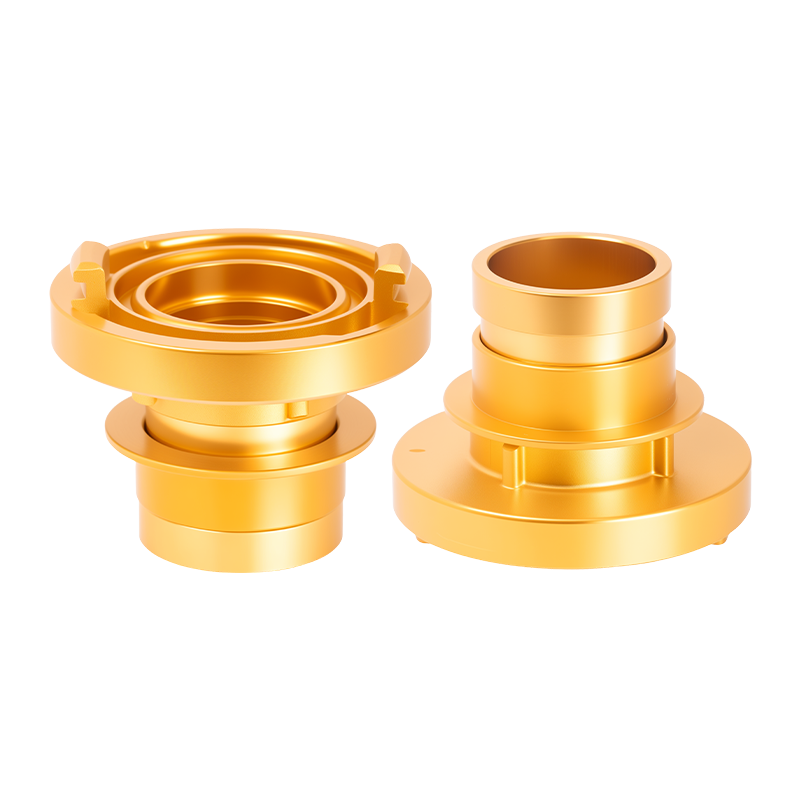
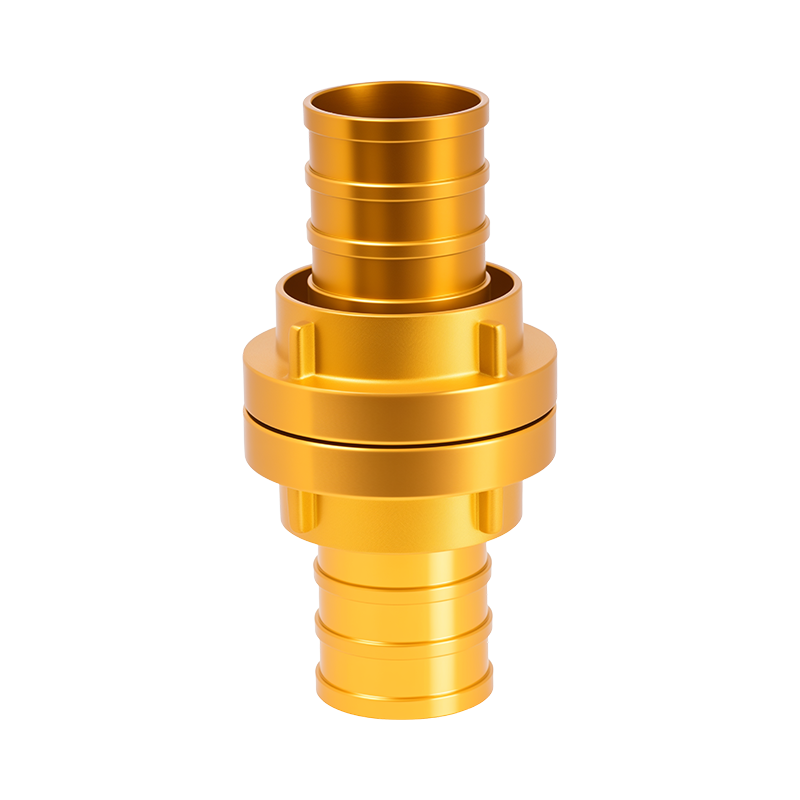
Storz, for example, uses symmetrical coupling halves that engage through matching lugs and can be locked with approximately a quarter turn. Instantaneous couplings use a different mechanism and are constructed around specific standards such as BS 336.
Could Quick Connect Go Beyond Traditional Fireground Use?
Yes, although the connection standard needs to match the application. The basic concept is useful anywhere hoses must be connected and disconnected repeatedly without relying on lengthy thread engagement.
- Large-diameter water supply: Storz couplings are commonly associated with large hose systems where rapid connection is useful.
- Fire hydrant connections: Storz pumper connections can provide a quarter-turn interface between hydrants and large-diameter supply hose.
- Industrial water transfer: Quick couplings can simplify temporary hose installations and equipment changes.
- Marine and offshore systems: Corrosion-resistant coupling materials can be specified for demanding water-transfer environments.
- Agricultural water movement: Larger hose assemblies can benefit from connection systems designed for repeated field assembly.
Commercial coupling ranges already cover applications beyond conventional firefighting. Storz systems, for example, are also used for industrial water transfer, mining, marine systems, and other large-bore hose applications.
Does Quick Connect Mean Universal Compatibility?
This is where buyers need to be careful. A quick connection is not automatically compatible with every fire hose or hydrant.
Different systems can use completely different connection dimensions and locking mechanisms. Even two products described as “quick connect” may not mate with each other.
Four Specifications Deserve Attention
- Connection standard: Identify the required Storz, instantaneous, or other standard.
- Nominal diameter: The coupling size needs to correspond with the hose and connected equipment.
- Locking design: Check lug dimensions, lever position, spring mechanism, or other locking features.
- Pressure rating: The fitting must be rated for the working conditions of the complete hose assembly.
A Canadian fire service specification, for example, distinguishes quick-connect couplings from threaded fire hose fittings and emphasizes that ordering specifications need to identify the required connection details to ensure compatibility.
How Important Is the Locking Mechanism?
A quick connection needs more than rapid engagement. It also needs to remain mechanically secure during hose movement and pressurization.
Some non-threaded coupling systems incorporate positive locking devices to reduce the possibility of accidental disconnection. This is particularly relevant to fire service applications, where hose movement can place mechanical loads on the coupling.
Storz systems may use lever-type locking arrangements on hose ends, while other quick-connect designs use different retention mechanisms. The appropriate configuration depends on the standard and application.
Can Existing Hydrants Use Quick Connections?
Existing infrastructure does not necessarily need to be completely replaced. Adapters can provide a transition between a hydrant's existing threaded outlet and a quick-connect coupling.
Mueller, for example, offers Storz adapters designed to connect to existing hydrant pumper nozzles. Its Storz hydrant connection is available for 4-inch and 5-inch pumper nozzles, while specified adapters can provide a 5-inch Storz interface for a 4½-inch NST nozzle.
| Existing Equipment | Possible Transition |
| Threaded hydrant | Storz adapter |
| NH/NST hose connection | Compatible adapter |
| Storz hose | Matching Storz appliance connection |
| Industrial hose | Application-specific quick coupling |
What Could Expand the Role of Quick Connect Fittings?
The next stage of development is not simply about making connections faster. Compatibility between different systems, improved locking mechanisms, material choices, and standardized interfaces can determine whether a quick-connect design fits a wider range of applications.
- Larger connection sizes can support high-volume water transfer.
- Corrosion-resistant materials can suit marine and outdoor installations.
- Positive locking systems can improve connection security.
- Adapters can bridge different regional or equipment standards.
Quick Connection Needs the Right Application
The future of quick connect fire hose fittings may extend beyond conventional fire hose assemblies, but broader application does not mean every quick-connect fitting can be used interchangeably. Size, connection standard, locking structure, sealing method, and pressure rating remain essential specifications.
As fire departments and industrial users work with larger hose systems and more varied equipment, quick-connect technology offers a flexible connection concept. Its real value comes from combining rapid engagement with a mechanically secure, properly rated interface.
Related Products

-
 (+86) 18968568369
Give Us A Call
-
 [email protected]
Drop Us a Line
-
 No. 32, Mechanical and Electrical Industrial Park, Donghai Avenue, Yuhuan City

Zhejiang Taizhou Honghe Technology Co., Ltd. is an emerging enterprise focusing on the research and development, production and sales of fire fighting equipment.
© 2025 Zhejiang Taizhou Honghe Technology Co., Ltd.
Storz Coupling & Firefighting Equipment Factory
