


 русский
 Español
 Deutsch
 عربى
عربى
Home / News / Industry News / Does Aluminium Alloy Fire Hose Coupling Improve Joint Reliability or Introduce New Wear Risks
Industry News


Does Aluminium Alloy Fire Hose Coupling Improve Joint Reliability or Introduce New Wear Risks
 2026.07.31
 Industry News
Content
- 1 Why Aluminium Alloy Has Become Popular in Fire Hose Connections
- 2 Joint Reliability Advantages of Aluminium Alloy Couplings
- 3 Wear Risks Hidden Behind Lightweight Design
- 4 How Water and Operating Conditions Affect Coupling Life
- 5 Surface Treatment and Manufacturing Quality Matter
- 6 Maintenance Practices That Reduce Wear Risks
- 7 Balancing Lightweight Benefits and Durability Requirements
- 8 Final Perspective on Aluminium Fire Hose Coupling Performance
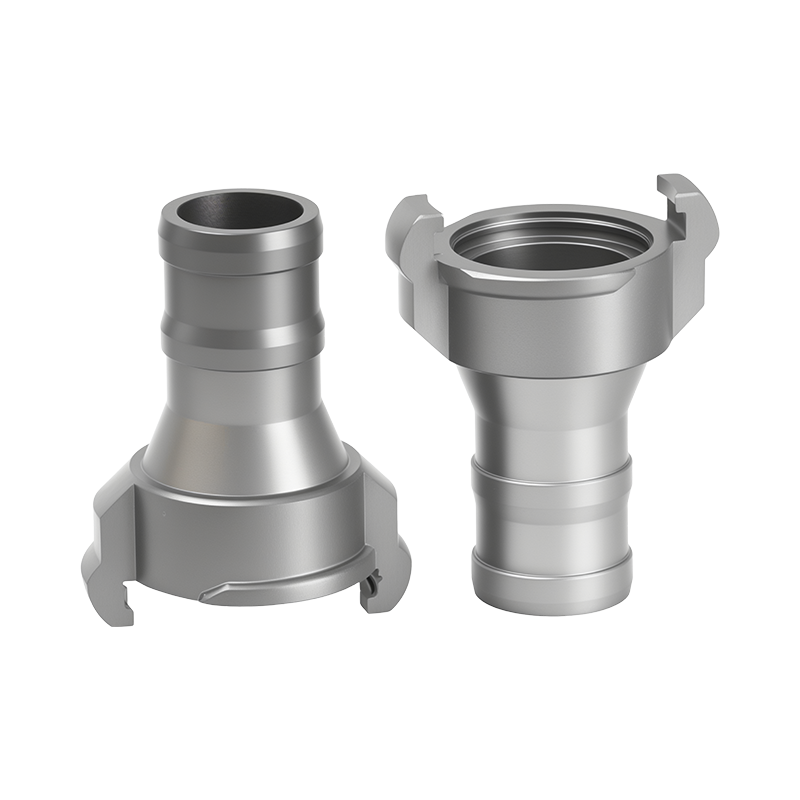
Fire hose connection systems operate under demanding conditions where lightweight design, connection speed, and pressure stability all influence overall performance. Among various coupling materials, aluminium alloy has become widely used because it reduces handling weight while maintaining sufficient mechanical strength. However, questions remain about whether an Aluminium Alloy Fire Hose Coupling truly improves joint reliability or creates additional wear concerns during long-term service.
The performance of aluminium alloy couplings depends on multiple factors, including alloy grade, surface treatment, connection frequency, environmental exposure, and interaction with other metals. Some fire hose coupling specifications allow aluminium alloys such as 6061-T6 and 356-T6 for coupling components because these materials provide a balance between strength and weight.
Why Aluminium Alloy Has Become Popular in Fire Hose Connections
Weight Reduction Improves Field Handling
Fire hose systems often require frequent movement, especially during emergency response, industrial water transfer, and outdoor operations. Aluminium alloy offers lower density compared with traditional brass components, reducing the physical load carried by operators.
- Lower component weight: Easier transportation and faster hose deployment.
- Reduced operator fatigue: Helpful during repeated connection and relocation tasks.
- Suitable for portable systems: Supports mobile firefighting and water delivery equipment.
Many aluminium fire hose couplings use heat-treated alloys such as 6061-T6, which provide a useful combination of strength, corrosion resistance, and machining performance.
Mechanical Strength Supports Pressure Applications
Lightweight construction does not mean the material lacks structural capability. Aluminium alloys can maintain adequate tensile strength for many hose connection applications, especially after proper heat treatment and machining.
| Material | Typical Characteristics | Application Consideration |
| Aluminium Alloy | Lightweight, good strength-to-weight ratio | Portable hose systems |
| Brass | High durability, heavier structure | Heavy-duty connection environments |
| Stainless Steel | Strong corrosion resistance | Harsh environmental applications |
Joint Reliability Advantages of Aluminium Alloy Couplings
Stable Connection Under Repeated Assembly
Fire hose couplings are often connected and disconnected many times during operation. Aluminium alloy components can maintain dimensional accuracy through repeated cycles, provided that machining quality and surface protection are properly controlled.
- Precise thread machining improves connection consistency.
- Accurate gasket seating supports water-tight performance.
- Lightweight design reduces handling stress on hose assemblies.
Good Resistance Against Environmental Exposure
Aluminium naturally forms an oxide layer that helps protect the surface from further oxidation. This characteristic makes aluminium alloy suitable for outdoor applications exposed to moisture and changing weather conditions.
However, corrosion behavior depends heavily on the environment. Saltwater exposure, trapped moisture, and contact with different metals can change long-term performance. Aluminium alloy corrosion studies have shown that localized corrosion can still occur under aggressive conditions, especially in chloride-containing environments.
Wear Risks Hidden Behind Lightweight Design
Thread and Contact Surface Wear
Although aluminium alloy provides good strength, it is softer than some traditional metal alternatives. Repeated tightening, impact, and abrasive contamination may gradually affect contact surfaces.
- Thread abrasion: Frequent connection cycles may reduce thread sharpness.
- Surface scratches: Dirt particles can damage sealing areas.
- Impact marks: Dropping couplings may deform connection edges.
These issues usually develop gradually and may not appear during normal visual inspection. Regular examination of connection surfaces helps identify early wear conditions.
Galvanic Corrosion Between Different Metals
One of the major concerns with aluminium alloy couplings is contact with dissimilar metals. A connection between aluminium and brass, copper, or steel components may create galvanic corrosion conditions under moisture exposure.
Fire hose coupling investigations have documented failures associated with electrolytic corrosion, where aluminium components were affected after contact with other metals and retained moisture.
| Metal Combination | Potential Concern | Preventive Approach |
| Aluminium + Brass | Galvanic corrosion possibility | Use isolation methods or compatible materials |
| Aluminium + Stainless Steel | Electrochemical reaction under moisture | Apply suitable protection measures |
| Aluminium + Aluminium | Lower galvanic risk | Maintain surface condition |
How Water and Operating Conditions Affect Coupling Life
Moisture Retention Creates Long-Term Challenges
Fire hose systems are frequently exposed to water, humidity, and outdoor contaminants. Water trapped around coupling interfaces can accelerate corrosion processes, especially after repeated operation without proper drying.
- Standing moisture increases corrosion opportunities.
- Salt deposits accelerate surface degradation.
- Contaminants increase mechanical wear during connection.
Pressure Cycling Affects Joint Stability
Fire hose assemblies rarely operate under completely stable conditions. Pump startup, valve adjustment, and flow changes create repeated pressure variations.
| Operating Condition | Possible Coupling Effect |
| Stable pressure | Lower mechanical stress |
| Repeated pressure changes | Higher load on seals and connection points |
| High-pressure surge | Increased stress on coupling structure |
Surface Treatment and Manufacturing Quality Matter
Anodizing and Protective Finishes
Surface treatment plays an important role in improving aluminium coupling durability. Protective coatings can reduce surface wear and improve resistance against environmental exposure.
- Improves surface hardness.
- Reduces oxidation speed.
- Enhances appearance retention.
Machining Accuracy Influences Sealing Performance
A reliable coupling depends not only on material choice but also on manufacturing precision. Small dimensional errors in threads, gasket seats, or locking components may affect joint performance.
Important production factors include:
- Accurate thread profile control
- Smooth sealing surface finishing
- Consistent dimensional inspection
Maintenance Practices That Reduce Wear Risks
Inspection Points During Regular Use
- Check coupling surfaces for scratches or deformation.
- Inspect gaskets for cracks and compression damage.
- Remove dirt and mineral deposits from connection areas.
- Monitor signs of corrosion between different metals.
Maintenance guidance for fire hose systems emphasizes inspecting coupling corrosion, connection movement, and sealing conditions to prevent unexpected failures.
Balancing Lightweight Benefits and Durability Requirements
The decision to use an Aluminium Alloy Fire Hose Coupling depends on application requirements. Lightweight construction provides clear advantages for portable hose systems, but long-term reliability requires proper material matching, corrosion prevention, and regular inspection.
Aluminium alloy does not automatically create wear problems, nor does it eliminate all connection risks. Performance depends on the complete system design, including hose material, adapter selection, environmental exposure, and maintenance practices.
Final Perspective on Aluminium Fire Hose Coupling Performance
An aluminium alloy coupling can provide reliable joint performance through reduced weight, sufficient mechanical strength, and practical field handling advantages. At the same time, users should recognize potential risks related to surface wear, galvanic corrosion, and repeated mechanical stress.
The most reliable hose systems are built around compatible materials, accurate manufacturing, and appropriate maintenance strategies. Aluminium alloy remains a valuable option for fire hose connections, provided that its operating environment and wear characteristics are carefully considered.
Related Products

-
 (+86) 18968568369
Give Us A Call
-
 [email protected]
Drop Us a Line
-
 No. 32, Mechanical and Electrical Industrial Park, Donghai Avenue, Yuhuan City

Zhejiang Taizhou Honghe Technology Co., Ltd. is an emerging enterprise focusing on the research and development, production and sales of fire fighting equipment.
© 2025 Zhejiang Taizhou Honghe Technology Co., Ltd.
Storz Coupling & Firefighting Equipment Factory
